

The trials and tribulations of renovating a bed and breakfast while it is open and without damaging the environment or disturbing the guests — we also cover Puerto Rico tourist attractions as well as things we find interesting.

A Classical String Quartet for Curious Coquis
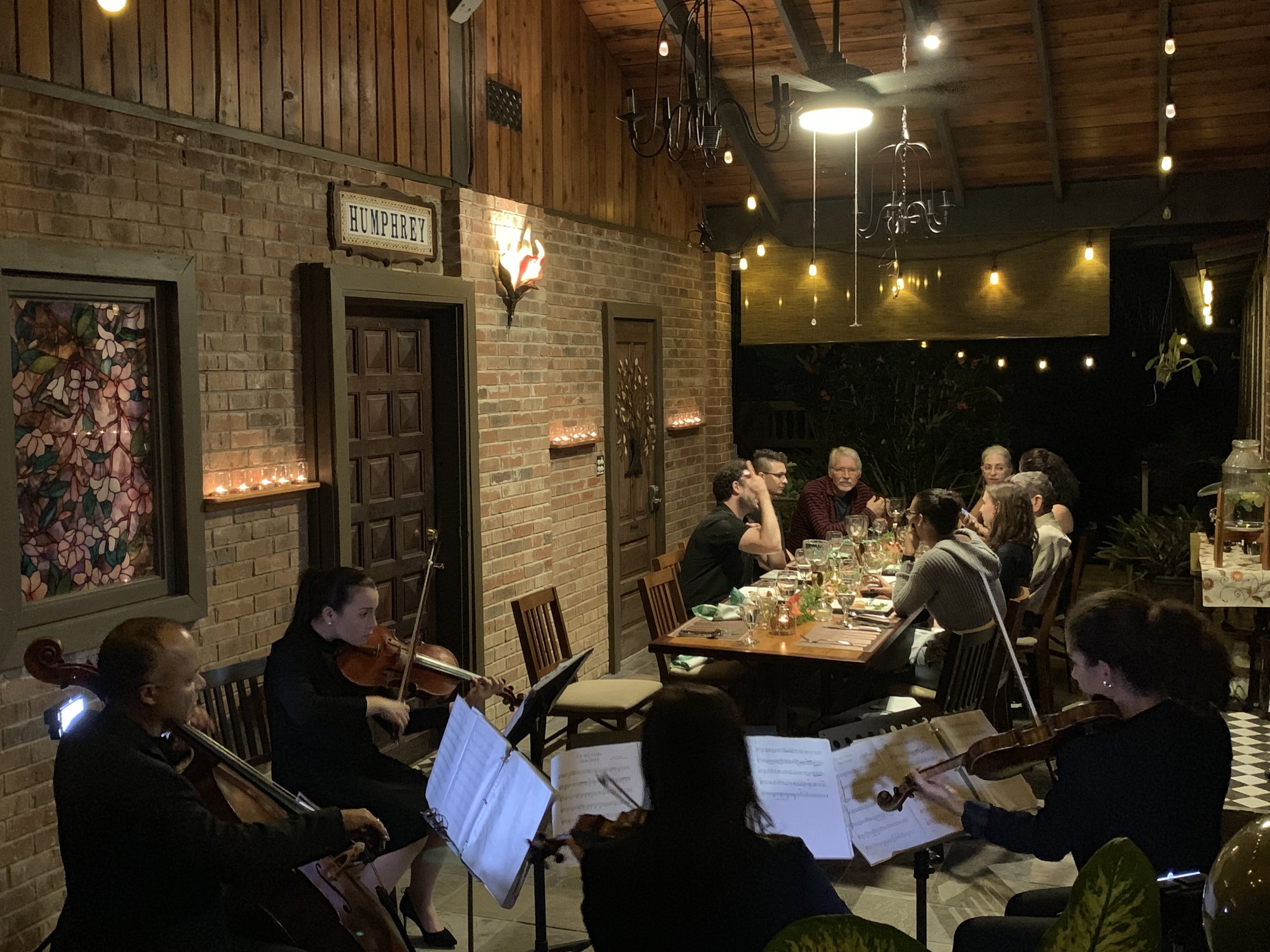
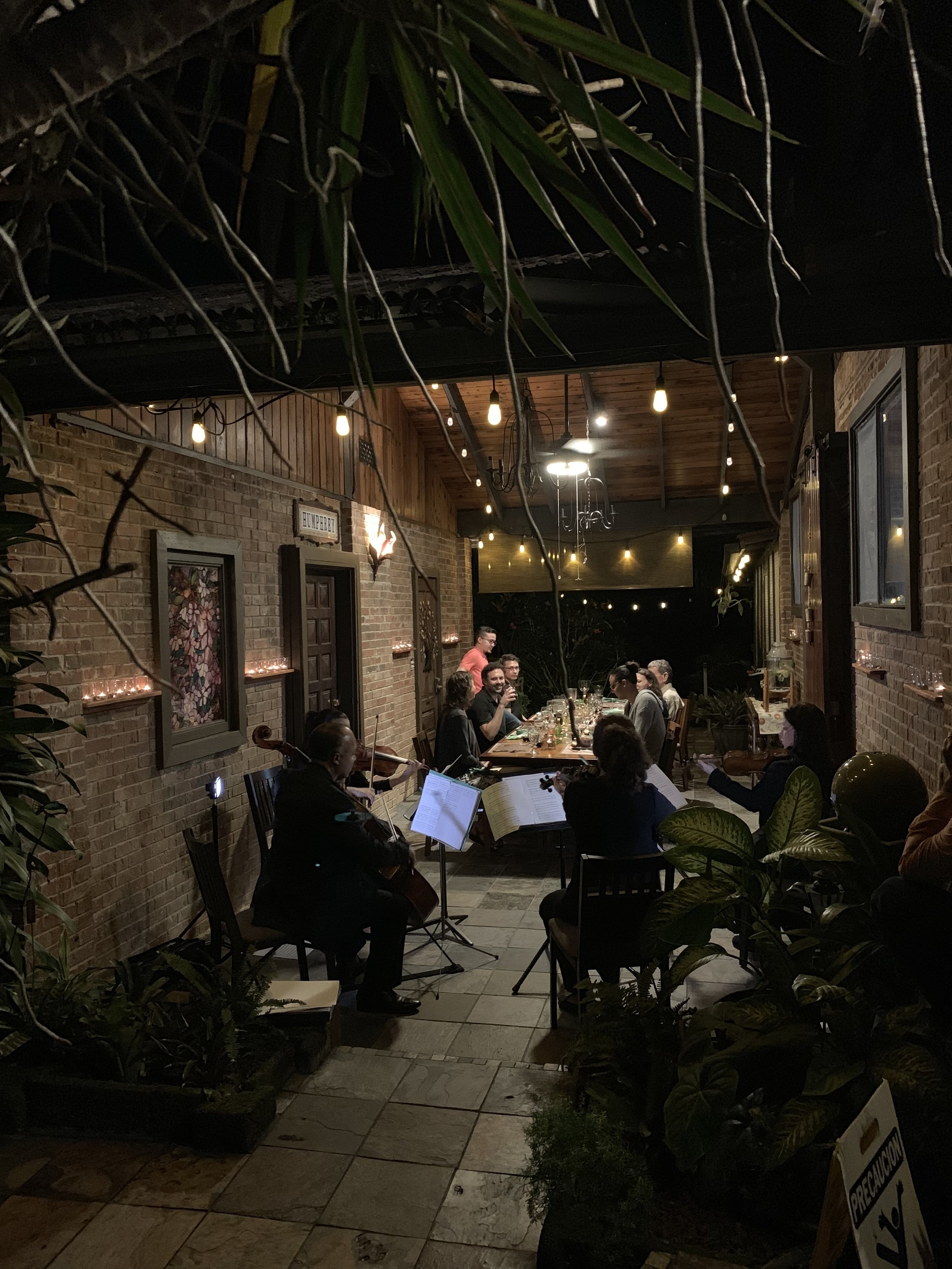
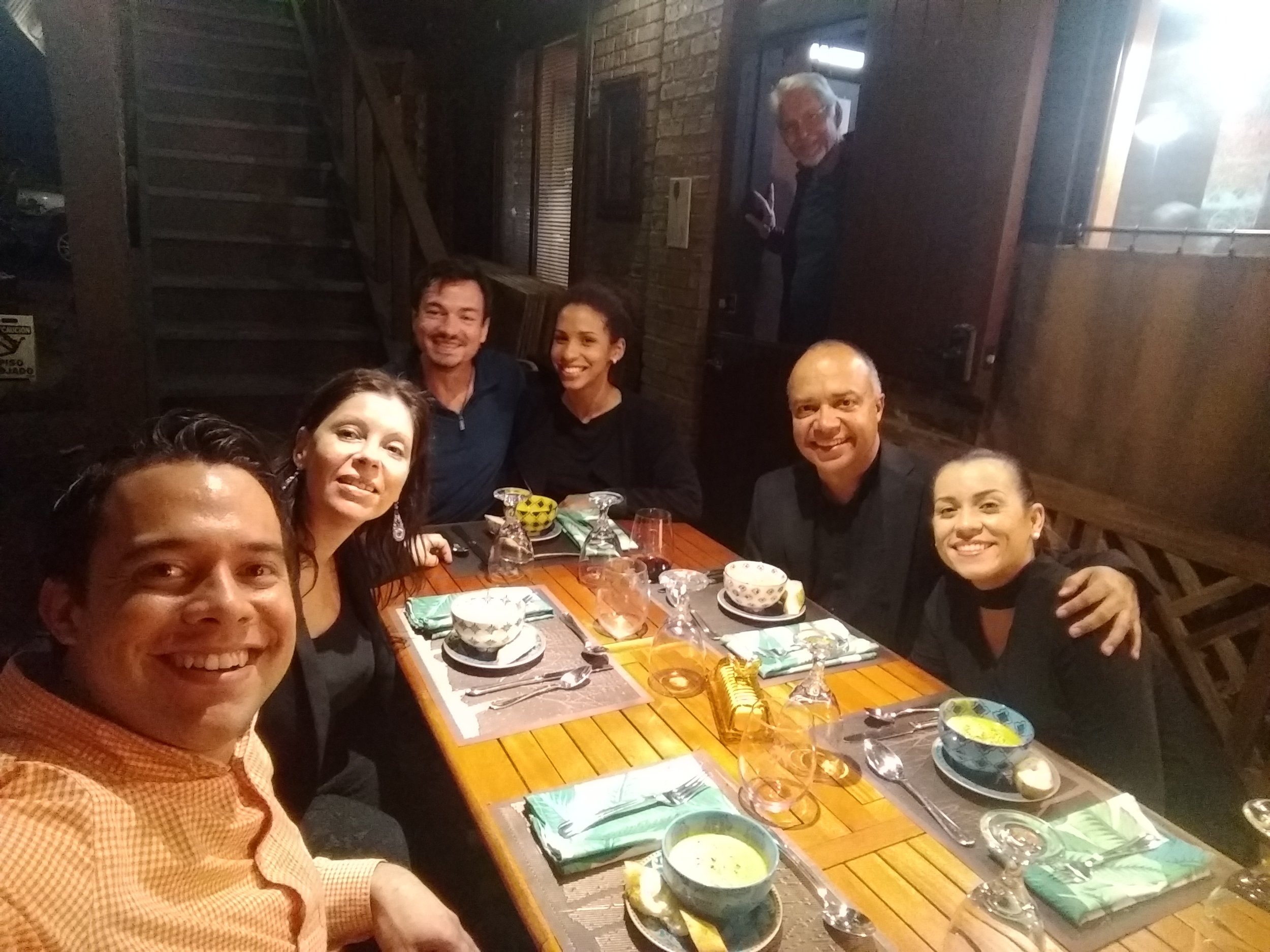
A gourmet, sophisticated dinner party at the Inn is made all the more special by a string quartet serenading us throughout the meal.
A chamber ensemble came to the Inn, and their acoustics rivaled the song of the coquis. How magical, to hear a classical string quartet of instruments mingling with the sounds of the rainforest. This is something you too might get to experience during a stay at the Rainforest Inn Bed & Breakfast…
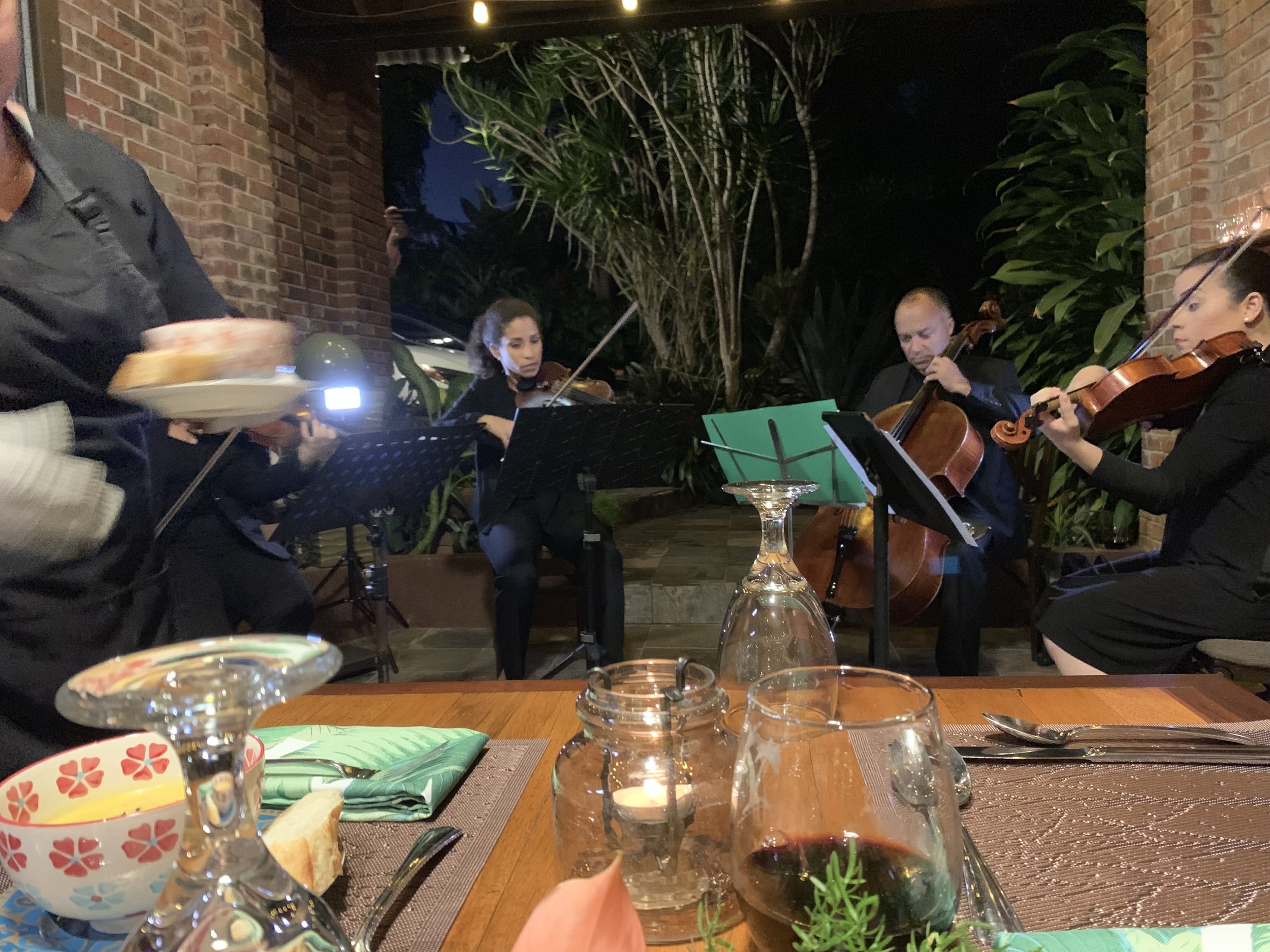
Mozart mingling with coquis, violinist Veronica Pellegrini and Lilliana Marrero Solís as another, Luis Miguel Rojas on the violoncello, and Rosa Sierra on the viola.
Yes, Bed & Breakfast is in our name; Bed & Dinner Party is not. And usually our guests do go “out on the island” for their dinners, since the Inn - though secluded and private - still has a wonderful range of restaurants with many choices of cuisines in its vicinity. But, once in awhile, Renée - with the help of interns, volunteers, and staff - cultivates an incredible dinner party experience for guests, as well as some dear local friends and close neighbors. As a guest of the Inn, these intimate gatherings give you a chance to share stories over a delicious four-course gourmet experience whilst sipping fine wines (or infused-water, or your drink of choice), all the while feeling more like you’re visiting a close friend’s home rather than a place you’re staying at as a “tourist.”
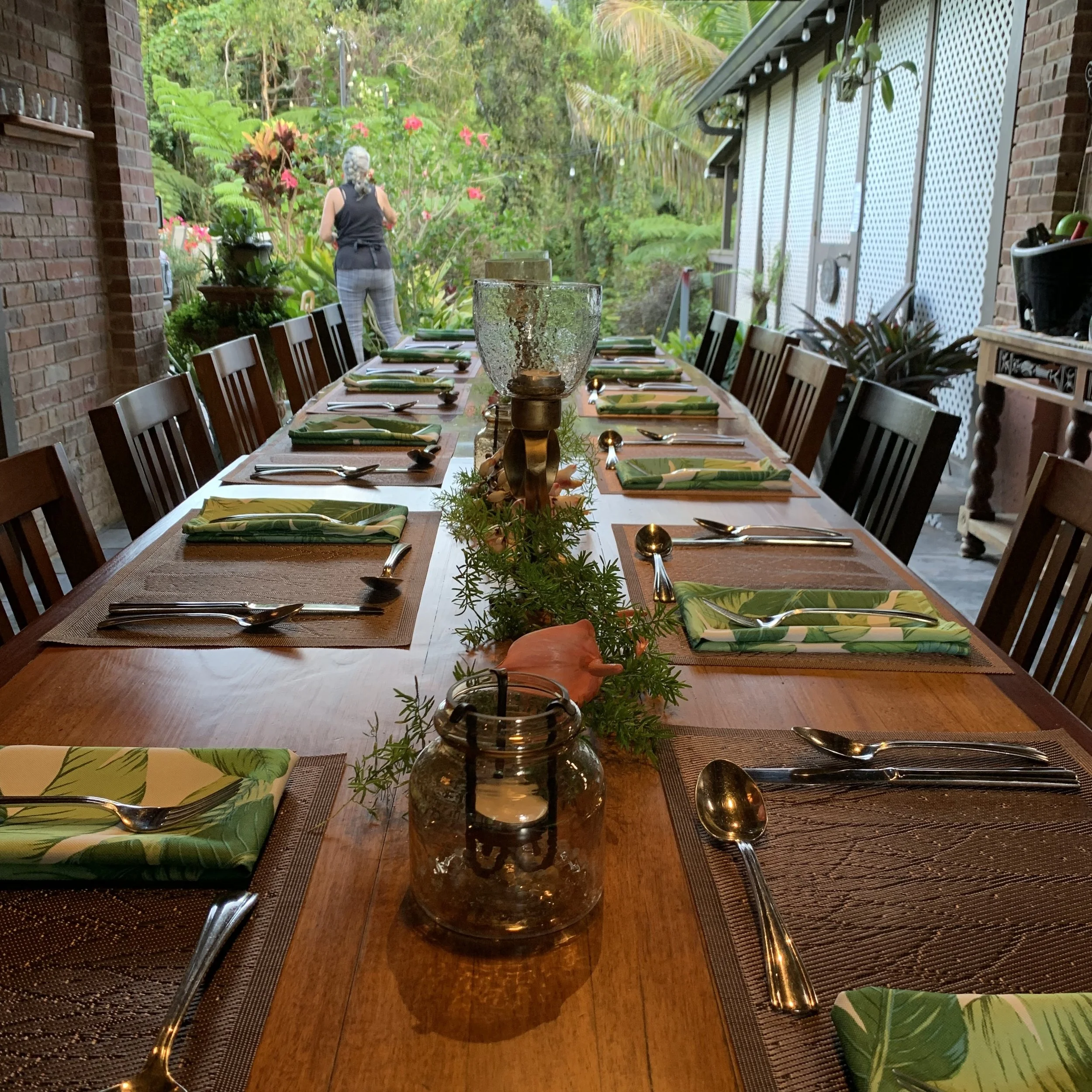
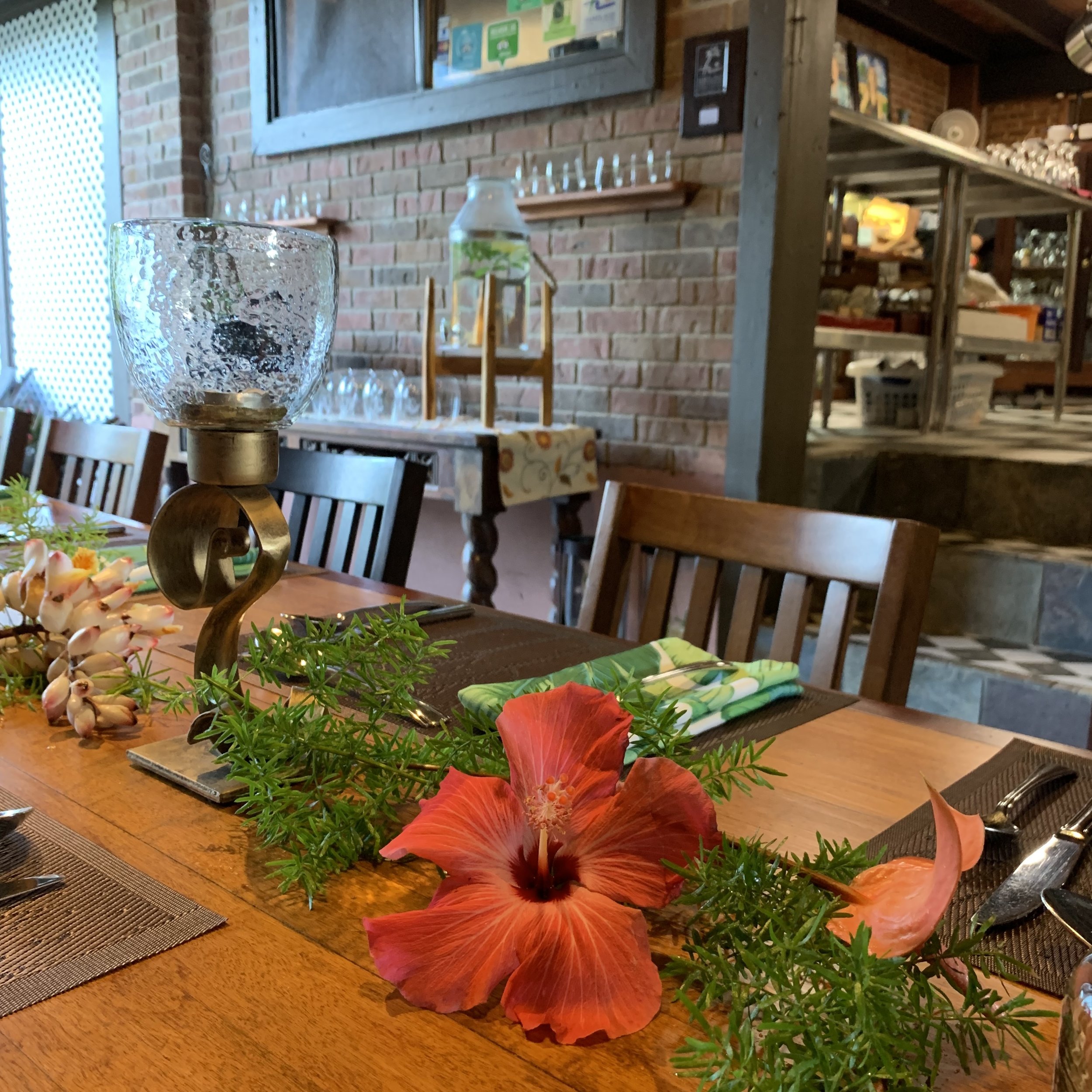
Like many of the ingredients in the meal, the table decorations also came from the property. You can see Renée picking Hibiscus in the background. And what a lovely view for a dinner party!
Don’t miss our updates on upcomming events, new stories, usefull tips, new availabilities and last-minute cancellations. We invite you to sign-up now so we are in contact :)
I was lucky enough to be part of one of these special dinner parties, which was made even more special by the fact that four incredibly-talented musicians played string instruments throughout the meal, and one gifted writer read a poem during “intermission.” As the tuning of string instruments mixed with the sounds of the jungle at dusk, I felt chills. And the poem, a blend of refined genius and humor, was a perfect interlude.
Musically-endowed friends of Renée and Bill were key to making this evening possible. Veronica Pellegrini, one of the two violinists who played, actually came to Rainforest Inn first as a volunteer, via Craigslist, about twelve years ago. She has since returned various times, to visit as a guest, because she loves the property and people so much. Veronica arranged the music that was played, as well as organizing the musicians in attendance and coordinating the impromptu date with Renée.

Front row seats for a top-rate performance.
The quartet included Veronica as one violinist and Lilliana Marrero Solís as another, Luis Miguel Rojas on the violoncello, and Rosa Sierra on the viola (in order from left to right in the above image). Reisaac Colón, Veronica’s husband, acted as the “presenter” throughout the meal, explaining what pieces would be played. He too plays the cello and will likely play at the Inn sometime soon, so that is something to look forward to. Reisaac also introduced Robert Egan, the writer who read a poem for us.

Robert Egan reads his poem while Renée listens from the kitchen.
Robert was here with violinist Lilliana, as he wanted to see the vistas and views offered by the Rainforest Inn, as well as enjoy Renée’s incredible cooking. Once he saw the friendly faces of guests and neighbors alike, Robert asked Lillana if she could see if we would like him to read us one of his poems, to which we all responded enthusiastically: Yes! We were so happy to have another impromptu addition to the evening.
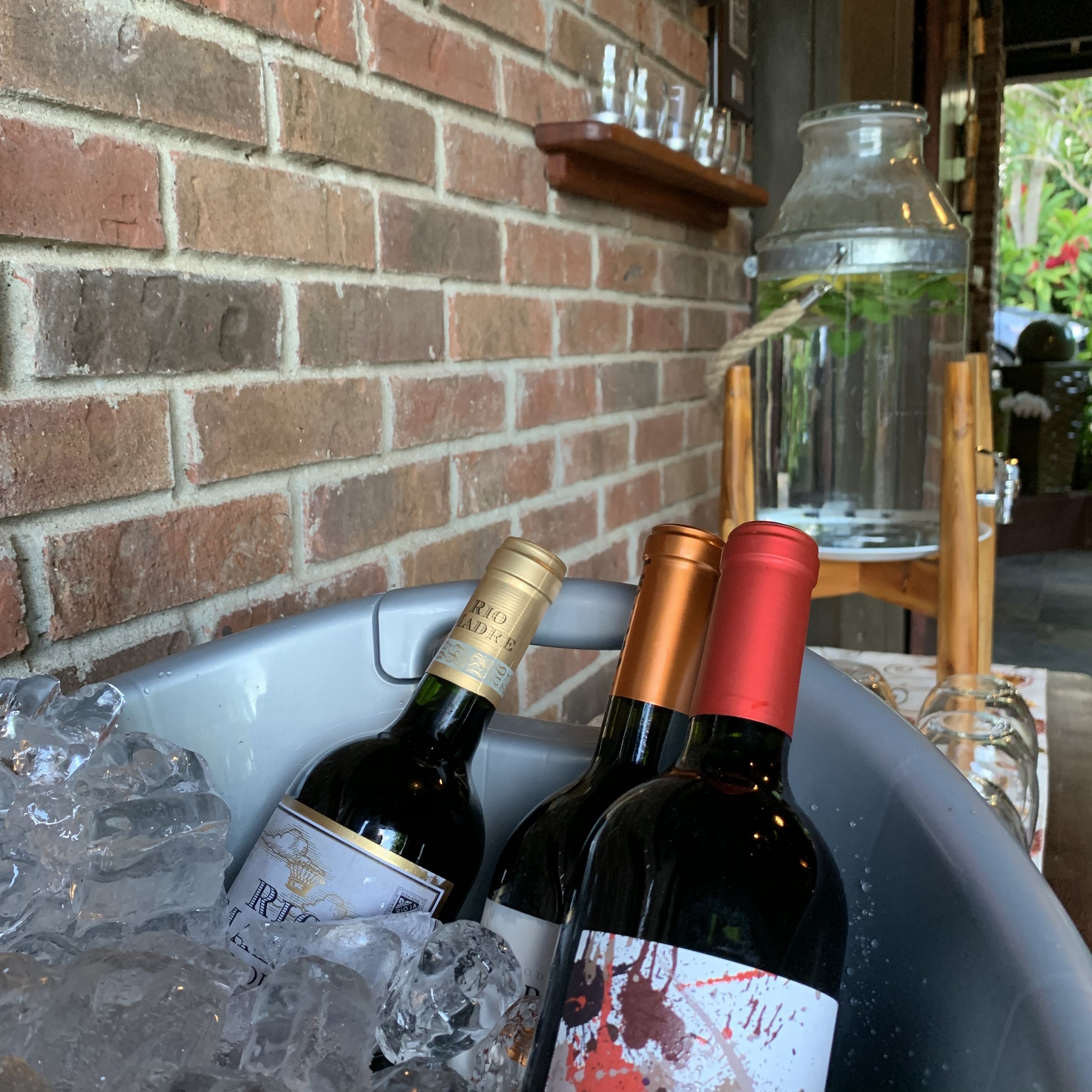
It was all quite sophisticated, with bottles of Malbecs and California whites constantly being uncorked to sustain us through four courses of food. Renée began the meal with a curried local squash soup (sopa de calabasa). Between its striking color and velvety, warm texture, one guest remarked “this is incredible” between bites.

Attention to detail is one of Renée’s specialities, obvious from the dash of fresh-cracked pepper topping the soup and the eclectic, inviting place settings.

Renée’s micro-greens often make appearances on Instagram as well as on guests’ plates!
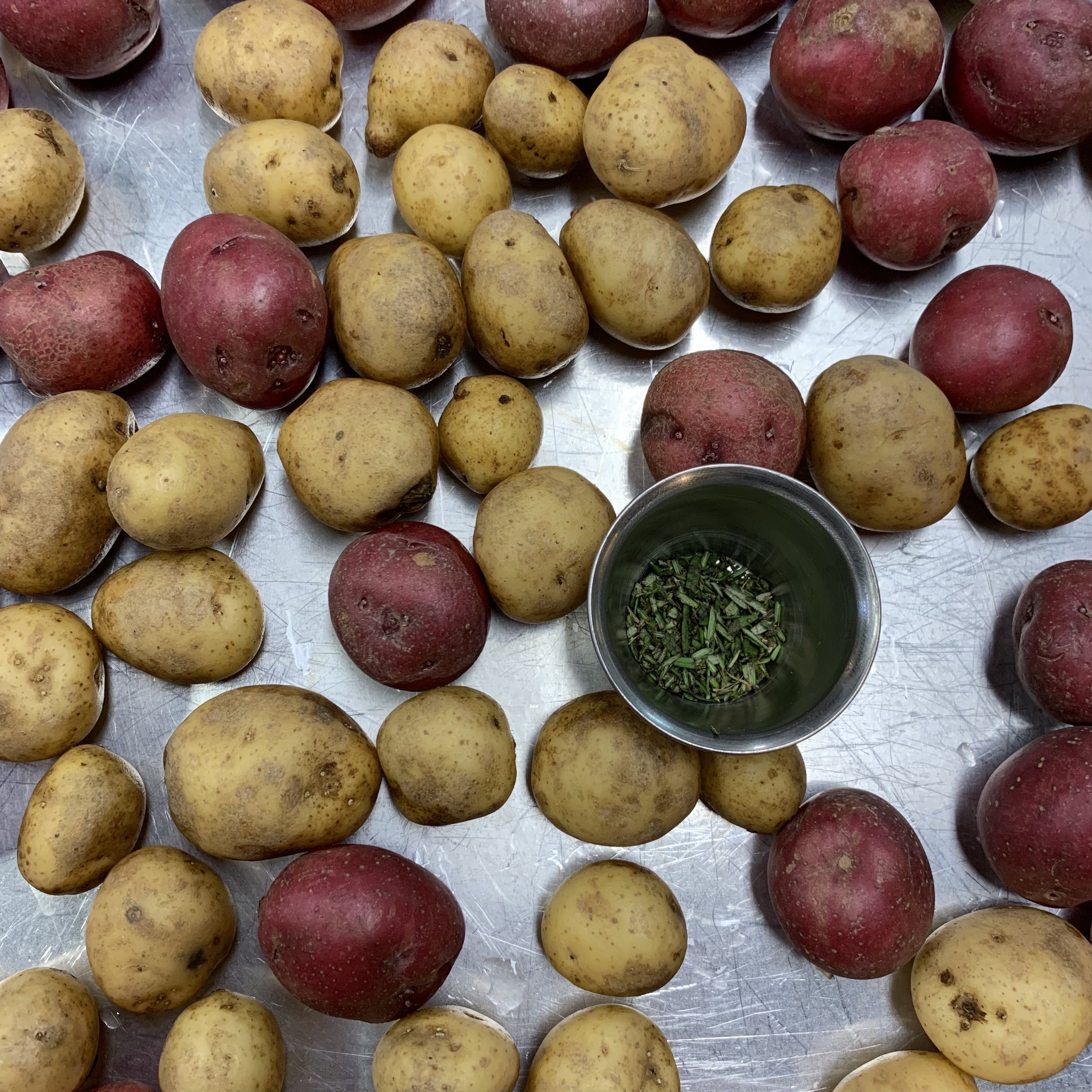
Then came a light, pallet-cleansing beet and citrus salad, sprinkled with toasted pine nuts for another texture. A satisfying, acidic vinaigrette coated each bite, with a few of Renée’s cultivated micro-greens (pea shoots) added as a finishing garnish. The main course, a pesto-coated fillet of salmon for those who eat fish and a pecan-mushroom loaf for those who do not, accompanied by perfectly roasted rosemary potatoes and asparagus, was enjoyed by us all as the musicians finished their set.
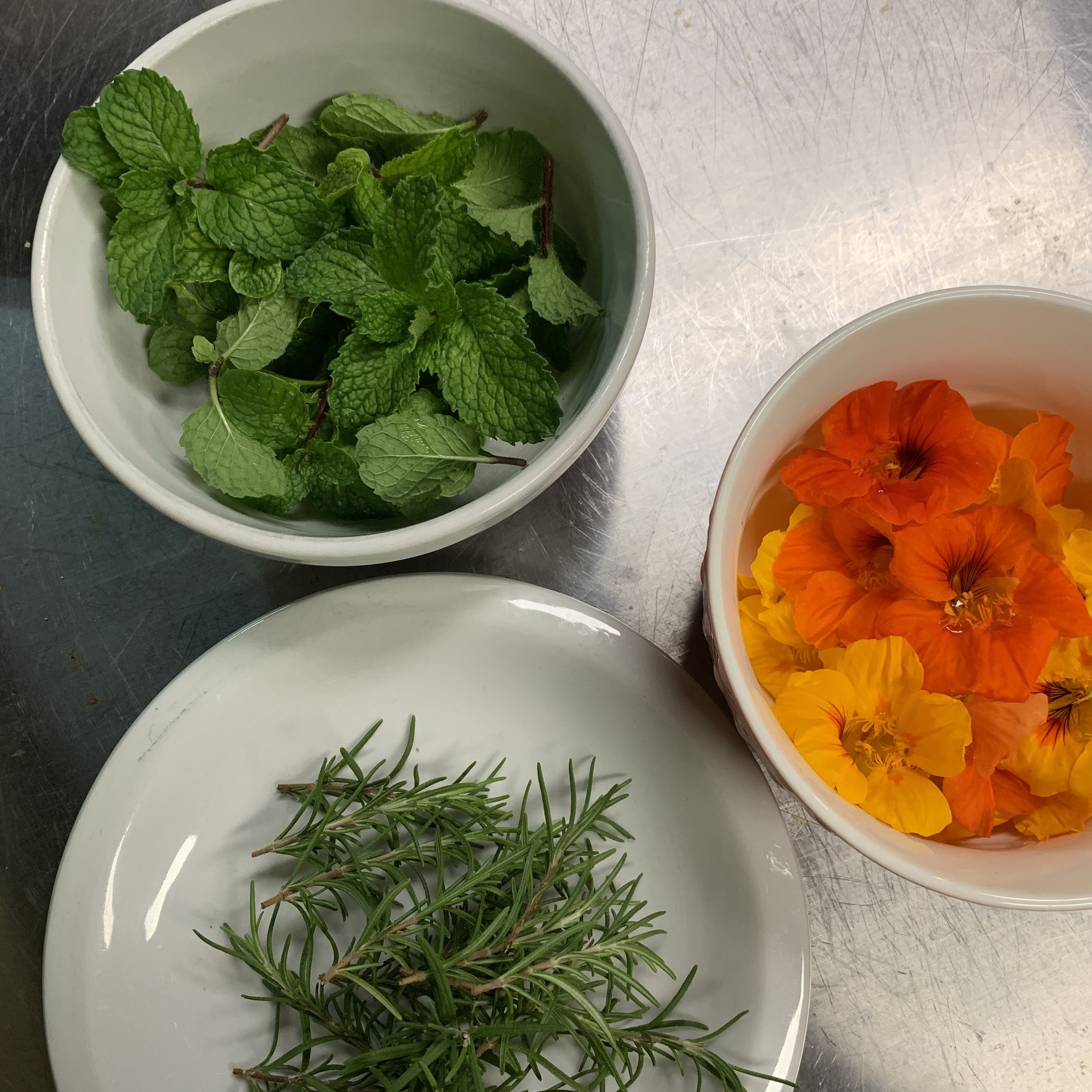
Now chorused by the coquís and our own conversation, we had a flourless chocolate cake for dessert, topped with a scoop of homemade ginger ice cream and a beautiful nasturtium edible flower. Bill made those who wanted one a cappuccino with his finest coffee. My stomach is growling as I think about it.

This dessert was a HUGE hit!
Amazingly, this dinner came together in the matter of a few days, and was not Renée’s first time organizing a gourmet “pop-up” meal for guests. In the past, the Inn has hosted other gatherings in the same vein, such as a twenty-guest murder mystery themed dinner party. For this, Renée likewise prepared everything, plus she acted one of the parts (she didn’t know until the end, but she was the murderer). While guests of Rainforest Inn can always expect a luxurious vegetarian or vegan breakfast, they can also look forward to the potential of participating in other impromptu events on the property, which often involve trying more of Renée’s superb cooking.
They love working with people in the surrounding community, their friends, and also their guests, to arrange special occasions like this luxe dinner party that makes their - and our - time in Puerto Rico all the more enriching. Cheers!

New Ceiba Ferry Service (& Some Fun on Culebra!)
A quick trip to Culebra for some good food and good company and a chance to review the new ferry service.
As an intern only staying one month as my January Term project, Bill & Renée still made time for me to take a weekend jaunt over to Culebra, a small, Puerto Rican island off the east coast of the big island. I chose to visit Culebra out of the two small islands (the other being Vieques) because the “fourth best beach in the WORLD” skims part of a northwestern peninsula, and who doesn’t want to say they’ve visited somewhere globally ranked. As my favorite author Mary Karr once wrote, “Cool, a state to which you aspire.” Yes, I admit, I do sometimes aspire to be cool.

Selfie at Flamenco Beach, fourth best beach in the world.
And cool I felt. As a solo-female traveler on a small Caribbean island, people (yes, mostly men) eagerly struck up conversations with me whenever I was seated at a bar, eating alone. Most everyone was always on their best behavior, but the female waitstaff always made a point to let me know they had my back should anything weird have happened (thanks, ladies!!). The coolest part was that Culebra seems to call out to and rope in Midwesterners. As a born-and-raised Hoosier, everyone I encountered had some tie to either my home state of Indiana or our neighbors: Illinois, Michigan, Ohio. The owner of the Culebra International Hostel, where I stayed, actually taught for 20 years in the school district next to the one I attended for high school!
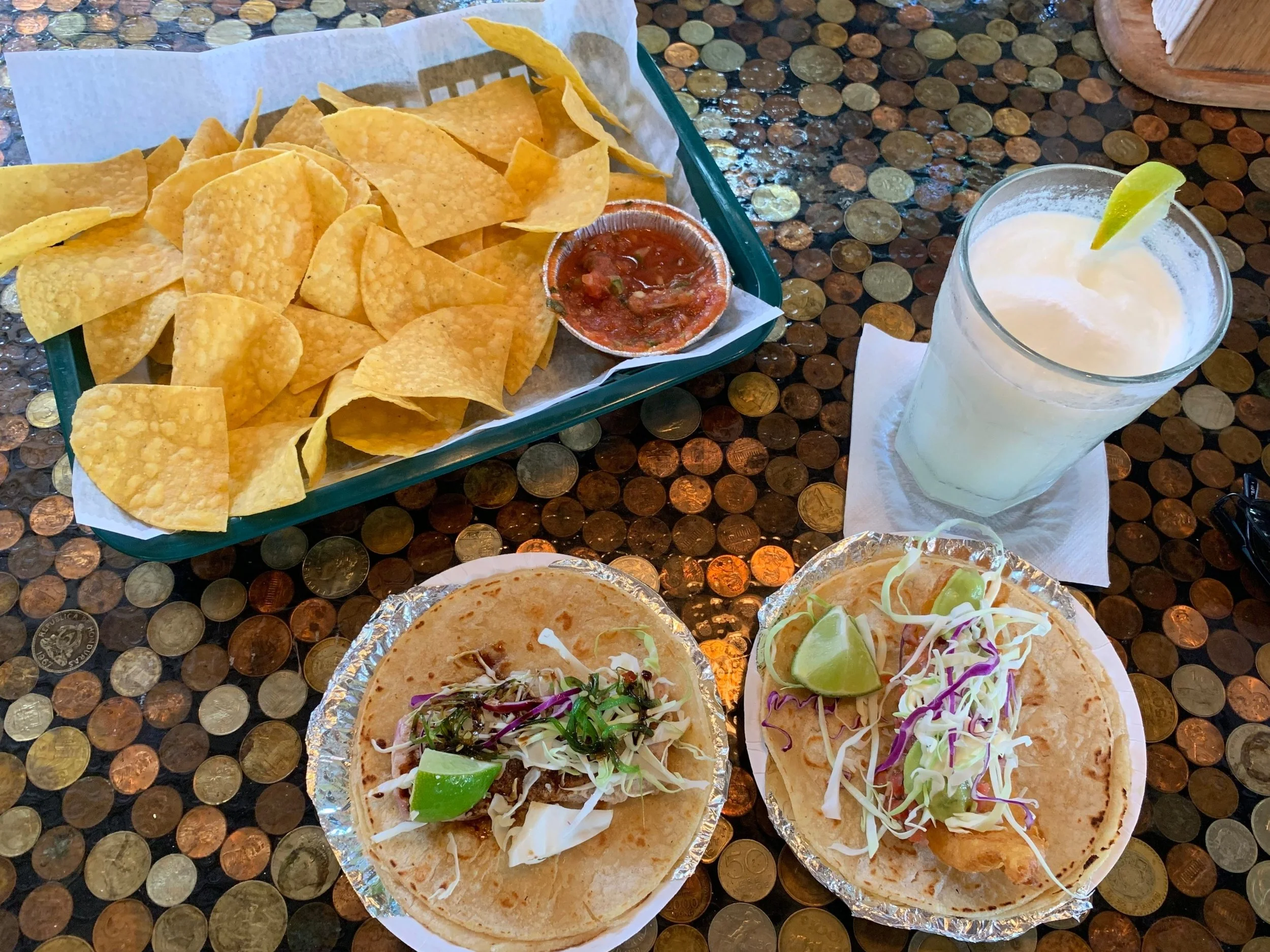
I enjoyed a delicious meal at Zaco’s Tacos, where I was informed about the difference between a good landing and a great landing on the Culebra runway.
I had so many great conversations with people, from a guy who spends summers giving tours just outside Fairbanks, Alaska before retreating to Culebra to continue mapping out its best breaks for surfing; to a chef with a penchant for “rum and Coke, but really [expletive] light on the Coke!"; to a couple with a small plane, who explained, “The difference between a good landing and a great landing on Culebra is that you walk away from a good landing but get to use the plane again if it was great.” Duly noted. I was quite happy I’d came in on the ferry after hearing that…clearly having learned that the approach to the Culebra runway is challenging (I also learned that the Vieques runway is full-sized and a less scary landing).
Ah, yes, the new ferry service. Puerto Rico Day Trips claims it is much improved and the best thing to ever happen in the history of the ferry service. And I will say, it was well organized, cheap, and I didn’t have to pray that my plane could be used again for another flight. For the most part, the ferry terminal was clean and the employees all extremely nice, accommodating, and good at their jobs. They even had a brief security check before you could enter the waiting space.
As someone who never took the old ferry service from Fajardo, I have no way to compare this new service to the old, but I really don’t have any complaints, other than the fact that they don’t yet let you buy tickets online or over the phone. On a Friday just as the tourist holiday season wrapped up but locals were still on break, I arrived about an hour before the 10:30 AM ferry and there was no line for tickets, so I easily got mine. A line did form as 10:30 approached, though, and some young adults I met at the hostel said they suggest arriving 1.5 hrs ahead of time to make sure you get a ticket, and more if it’s in high season for locals (summer).
Christian Soto and Adlin García actually sat behind me on the ferry on the ride over; they remembered me because we all three were eying an expensive-looking Catamaran anchored in the bay the ferry docks in at Culebra. Christian in particular remembers the old ferry service, and explained to me why he thinks switching to Ceiba from Fajardo was the right thing:
It’s less messy now, and it was way more crowded in Fajardo. Tickets sold out so much faster when it left from there…we used to have to go 3-4 hours, or even days, in advance to buy tickets. There’s also more seating in Ceiba for when you’re waiting. The ferry itself is also faster.
Yes, the ferry really is fast. Even I, who have taken many a ferry trip, was surprised by how quickly that giant thing could move across the open ocean.

The ferry, in all her glory. And boy, is she fast.
However, not everyone was as enthusiastic about the switch as Christian and Adlin. One of my various bar-mates, who didn’t wish to be named but is a Culebra resident, gave me his (slightly intoxicated) perspective:
I think it is a mistake, because it was just so sudden - from a place established back in the 40s in the beautiful downtown of Fajardo…to the now far out Ceiba terminal that no one knows how to get to. It’s dark and scary and a lot of people just say SCREW IT and turn around to go back to San Juan. It’s inconvenient now.
Though I don’t agree that “dark and scary” are the right words, I do agree that the Ceiba terminal is much further. It’s located in Roosevelt Roads, a used-to-be military base that is now mostly overgrown and largely abandoned. You leave the civilization of actual Ceiba and wind and wind along roads, which need to be repaved in many spots, following signs to the ferry. And eventually you do come to the ferry terminal, which has ample parking space, and a snack bar that is sometimes open, sometimes not. That’s it though. Definitely bring a book or hold off on checking your Twitter feed until you’re out there waiting to board the ferry, because there isn’t other stuff to go do anywhere nearby.
The service is also privatized now, essentially because whatever government entity ran it before kept failing inspections and leaving late and just making a mess of things. My ferry to Culebra did leave at 10:45 not 10:30, but the return ferry left promptly as scheduled, likely because only about ten of us had to board.
All in all, I had a successful trip and just relaxed, knowing it would all work out and burying my nose in a memoir while waiting in the open-air tent alone. I personally was fine with the $4.50 round-trip ferry ride, but can see why some others - especially if pressed for time - would benefit from spending a bit more to fly in and out of Culebra. (The airport is still located in Roosevelt Roads, but a much shorter drive into the base than the ferry terminal.) If you’re interested in visiting Culebra or Vieques during your vacation to PR, I’d recommend perusing the Transportation page on the Rainforest Inn website that I worked on, as it explains the best way to make moves out to one of the smaller islands and other local transportation issues.
And, you really should try to have some fun on Culebra. I agree that it was a stellar beach, I ate some good food, and met some interesting folks. Thank you Bill for braving the “dark and scary” drive to the ferry with me and Renée for giving up a pair of helping hands for the weekend! Visiting the smaller island was a highlight of this internship, which has been fun and rewarding regardless of whether I’m working or playing.
Don’t miss our updates on upcoming events, new stories, useful tips, new availabilities and last-minute cancellations. We invite you to sign-up now so we are in contact :)

See, it’s not dark and scary!
Taste of the Rainforest
The Rainforest Inn, deep in Puerto Rico’s El Yunque rainforest, grows a wide variety of tropical fruits and produce - and lets you truly taste the rainforest.
The Rainforest Inn’s famous breakfast is made even better by the plethora of fresh fruits and produce grown on the property.
From the micro greens she raises in the kitchen beneath a grow lamp, Renée cultivates leafy, mature greens. After snipping the micro greens for consumption, she places the nearly-translucent roots into fertile soil, which sits in a patch of sunshine just outside the kitchen. From these left-behind roots sprout arugula, kale, and other hearty greens. Beside this sits a pot of New Zealand spinach, which Renée cautions should never be eaten raw if you want to enjoy it…
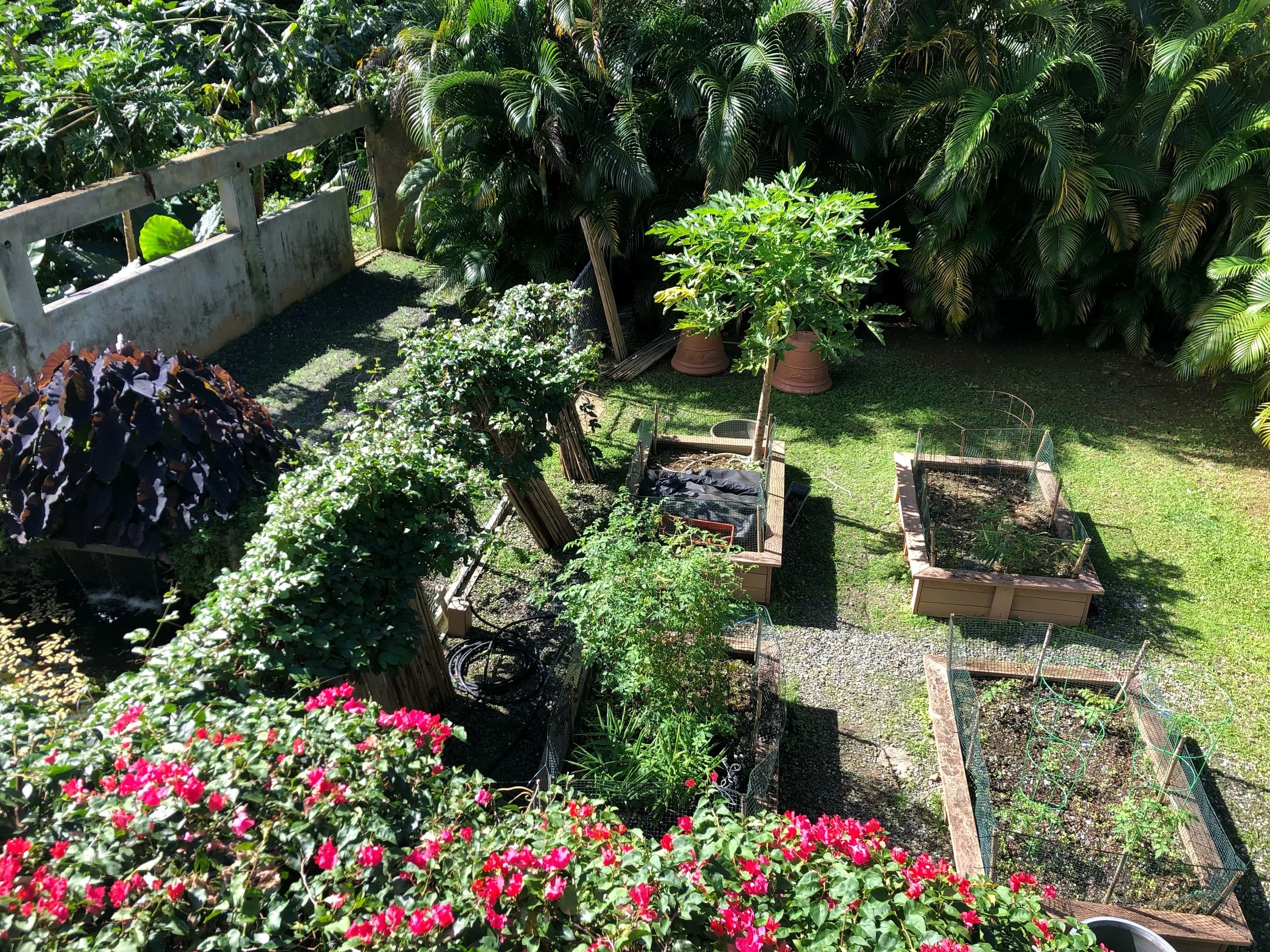
Situated on a part of the property without canopy overhead sunshine and nutrients bathe the garden consistently. Tomato vines stretch up along their metal cage towards the sky. Renée pulls aside the fronds of an unfamiliar-looking plant to reveal its roots: edible ginger. “I love ginger and have a great ginger crepe recipe that I serve,” Renée explains. A red ginger flower graces one of the plants.

This new, flowering stalk grows from a ginger root.
To see spices and produce typically purchased at grocery stores in the “wild” is tantalizing. I wish there was a ripe papaya to taste, as a small tree grows in the garden and larger ones grow nearby. Yesterday’s “smoothie of the day” featured papaya, so I know the juicy ones got chucked into a blender before I arrived. Still, yellow tinges the base of one green papaya, announcing its impending maturity; I cannot wait to have a try.

A friendly lizard hangs out on a papaya as they wait to get ripe.
Parcha vines grow along the fence separating the garden from Bill and Renée’s private porch. A koi pond, which features its own bio filter filled with mint, spearmint, black magic taro, and watercress, also has a gurgling waterfall. The koi flash and glisten in the sun. The parcha vines dangle a tropical fruit known as parcha in Spanish or, in English, passion fruit.
Don’t miss our updates on upcoming events, new stories, useful tips, new availabilities and last-minute cancellations. We invite you to sign-up now so we are in contact :)

To eat the parcha (passion fruit), you just scoop out the insides!
These little fruits (in the plant world passion fruit is considered a “modified berry” of the family cucurbitaceac) have pulpy interiors that taste of tangy fruit punch, a refreshing snack. Apple-banana trees (locally known as manzanos) grow around the property - unlike the classic banana, these have a flavor more similar to apples. One can also easily find starfruit near the inn’s parking spaces when unloading.

Checking to see how ripe a star fruit is.
Harder to find, a Pomarosa tree flowers alongside the building in construction for the soon-to-be spa, gym, and three-floor private villa Bill refers to as the Treehouse Suite. A single yellow fruit dangles from its branches, as it’s not yet fully in season.
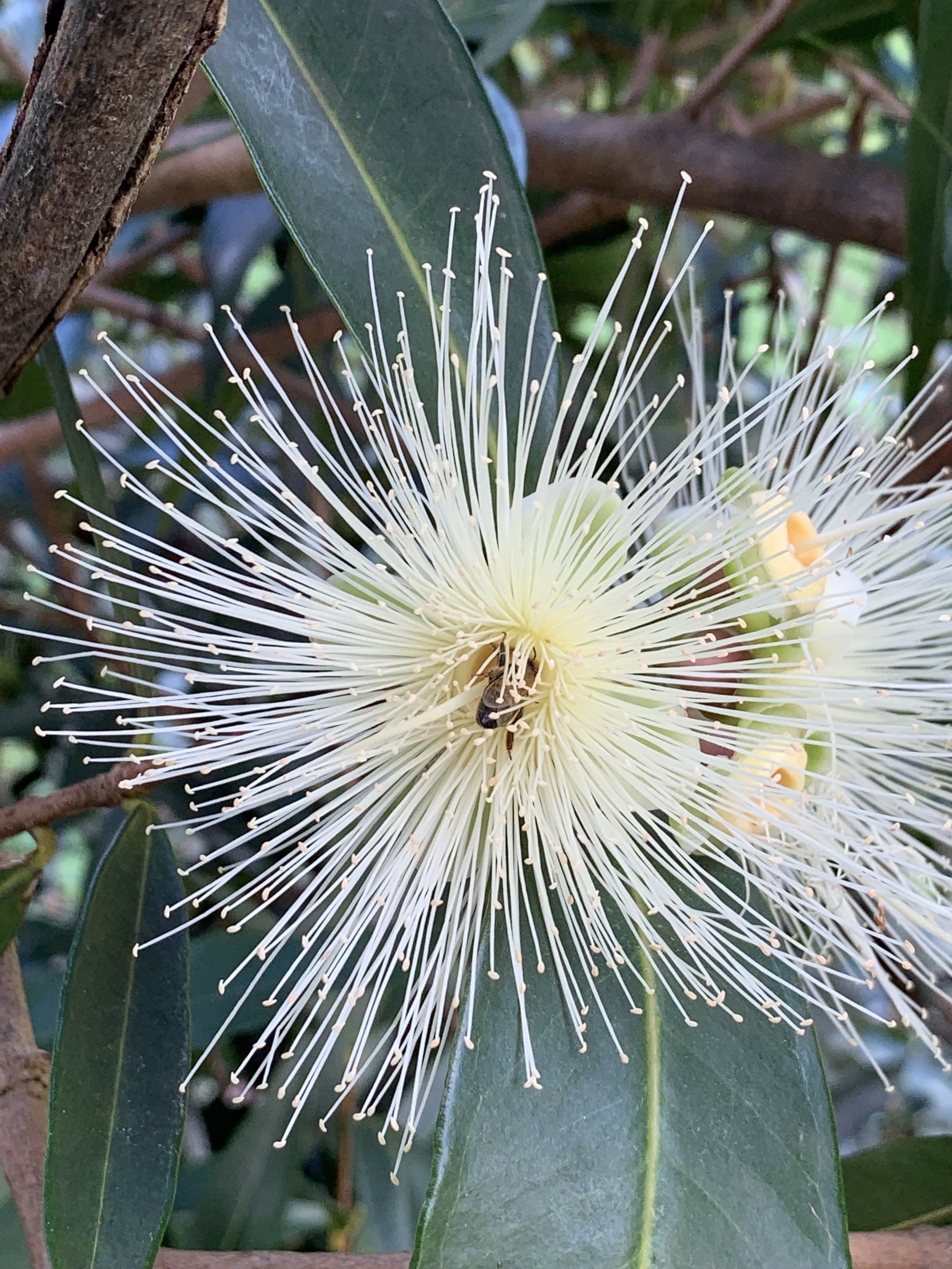
We love our pollinators! This little friend is inside a Pomarosa flower. Next will come the fruit, which resembles tiny yellow apples and smells very floral.
Below, lime, mango, and cacao trees, and pearl mangosteen, intersperse the non-producing foliage. These small tropical fruit trees are planted in a cleared area with jungle nearby. On the terrace overlooking this grows a bed of pineapples surrounded by strawberries and culantro, a wide-leafed cousin of cilantro used in many Puerto Rican dishes like rice and beans. Renée uses the culantro in her breakfast burritos.

Incredible vista beyond the pineapple, strawberry, and culantro bed.
Nearby (below the large main koi pond) you can also find a miracle fruit tree, whose berries change the chemistry of your tongue so that everything you eat afterwards tastes sweet.
Watercress fills the property’s main bio-filter and keeps the large koi pond crystal clear. Nearby, Renée keeps pots of various spices: thyme, rosemary, basil, parsley, and licorice. Edible flowers grow in several pots, as does aloe. Around every corner of the property, something edible grows from the earth. This includes the Strangler Fig tree, whose fruit is enjoyed by birds and bats rather than humans.

Volunteer (intern) Grace smelling the fresh herbs to decide how to season her dinner.
Harvested for flavor and reflective of the Inn’s larger commitment to sustainability and stewardship, all produce is happily shared with guests. From avocado toast topped with baby micro greens to crepes spiced with fresh ginger and smoothies made with just-picked papaya and starfruit, part of experiencing the Puerto Rican rainforest is tasting it.

Hiking in the Rainforest - our choices for the best hiking shoes and clothes
Hiking boots or even most trail running shoes just become caked mud ice skates when hiking El Yunque trails. Laurie discovered the aggressive lugged-tread flexible souls of Inov-8 shoes and now I bought some new ones and tell of my experience with them.

Hiking in the El Yunque Rainforest can be a muddy experience. It rains a lot here and our Lost Machete trail is often very muddy as is the El Toro Peak trail (our favorite long trail).
“The best shoes for hiking muddy El Yunque rainforest trails. It’s not hiking boots.”

Thorny vines like these are why I sometimes wear gloves when hiking in the rainforest.
Sometimes our adventurous guests (and nearly all of them are) arrive at our inn without the preferred clothes and shoes to wear on the untamed trails which we recommend. When they call or email first we can offer recommendations but too often they show us their Tevas or trail running shoes after they get here and ask (looking down at their feet) if they would be ok. Packing for traveling is tricky. You need footwear that can do double-time. Most people bring Tevas and sneakers or even flip-flops because they know they will be walking in the city, on the beach, or at the airport. Of course you can wear anything on the developed "Disney-style" trails in the center of the rainforest where the visitor center is and also where the hordes of tourists flock together. On those manicured paved trails with the nice rest stops around each turn (to duck out of the rain) and the informative signs, you can wear flip-flops (called chancletas here) and shorts and have no problem. But on the Indiana Jones style trails we recommend at the rainforest inn (when asked by our guests for something adventurous) you would be in trouble. You have to wear long pants, consider a long-sleeved shirt and perhaps even leather gloves (if you’re going fast). I also like to wear a good hat too because I don't like how the spider webs feel in my face nor web denizens crawling in my hair. A hat is good for the constant rain too (no little trail huts to duck into on the real jungle trails).
Don’t miss our updates on upcoming events, new stories, useful tips, new availabilities and last-minute cancellations. We invite you to sign-up now so we are in contact :)
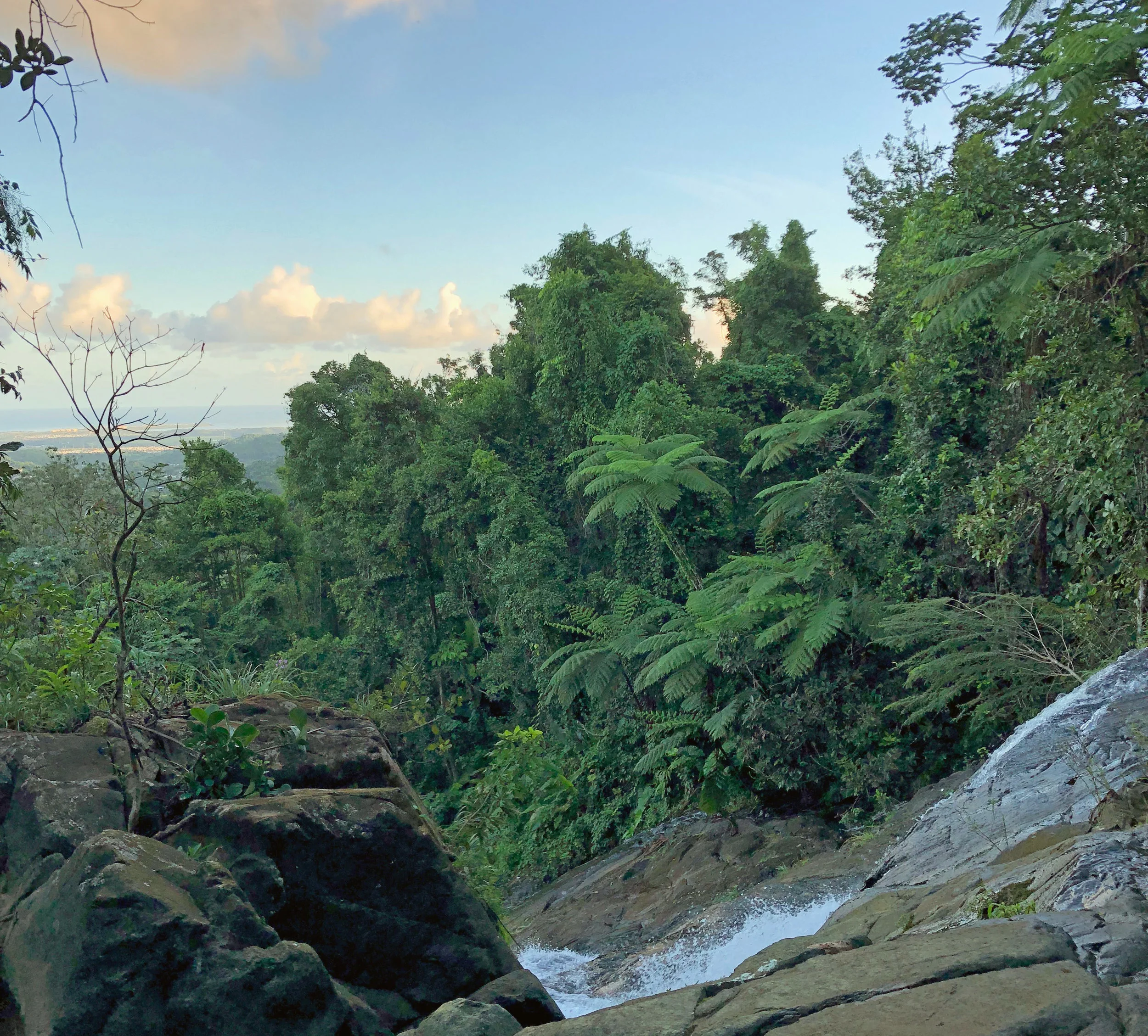
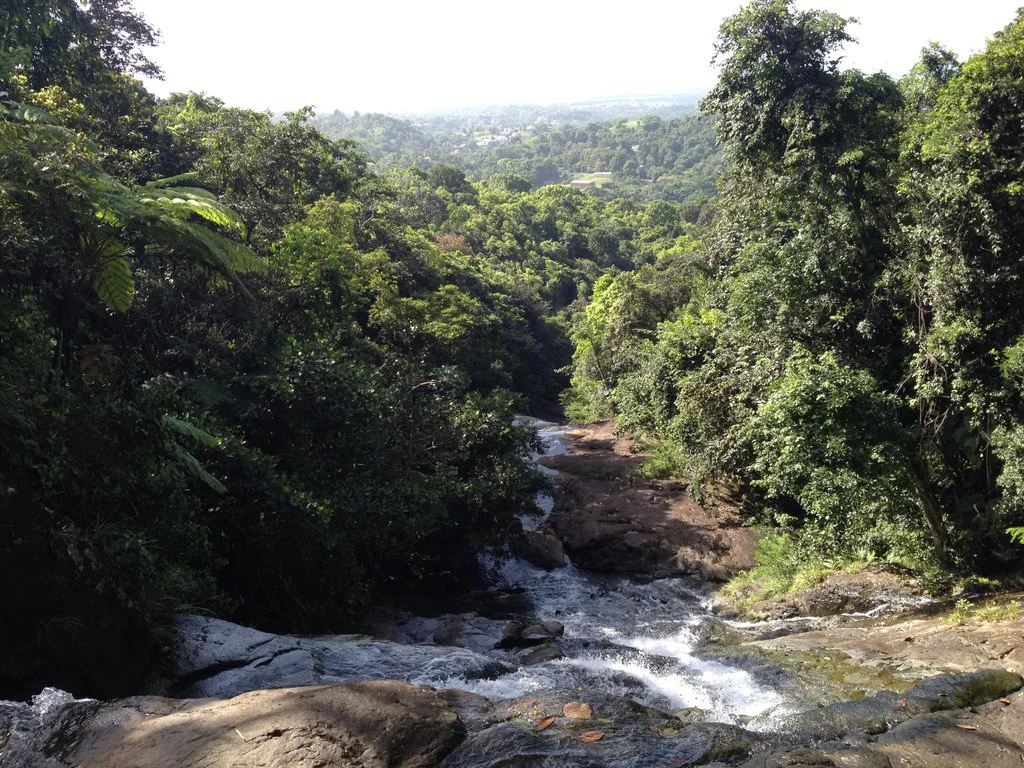
The private waterfall at the end of Rainforest Inn’s Lost Machete hike
A poncho is really not necessary because they are hot and the hat takes care of most of the bother from our warm tropical showers. You might want to carry a windbreaker for the high cool mountain rains. I recommend Tilly hat's as they wash easily, pack well, and are comfortable. They are versatile hats that you can wear on the beach and sight seeing as well. For eyewear, you don't normally need sunglasses in the jungle but now that 70% of our canopy has been lost from hurricane Maria here in Puerto Rico you will need them as well as sunblock. Pants that are the kind you zip off the bottom legs are great especially for swimming if you don't want to go natural (the swimming holes we send you to are way off the beaten path and it's very unlikely there will be anyone seeing you). Shirts can be any of the new travel shirts. Long sleeves are best (you can roll them up). You have to protect your arms and legs because of the combination of razor grass and the "Christmas bush" which is in a few areas of some of the deep jungle trails. The Christmas bush has an intense poison ivy effect which in combination with the razor grass cuts could spoil your vacation. Please remember that we are talking about intense jungle treks not the manicured hikes that are also offered in the El Yunque rainforest. We can also recommend some easy hikes with open improved trails which are in the jungle and have some canopy and are also only hiked by our guests (hopefully no former guests will post a blog saying how to get to some of these places).

Anna of “Crazy in the Rain” photography demonstrating the wrong clothes to wear on our Lost Machete Hike. — photo by Anna Vaswar

You can always tell when you’re following someone wearing Inov-8 aggressive tread shoes.
The most important thing is to bring the right shoes. Renée discovered Inov-8 shoes when we first started hiking together. Inov-8 is a small British company founded by Wayne Edy in 2003 and recently acquired by Descent. The sole has an aggressive tread with little lugs which help keep you from slipping but the big advantage is how thin it is so the flexing action of your foot knocks the mud off and your foot can hug the elevations and textures of the trail. I am raving about these shoes and my disclaimer is that the company not only didn’t give me any free shoes they were actually not very helpful (in the beginning) when I was putting together the information for this very popular blog. I learned that you can only buy their shoes easily on Amazon. Their website only ships to Great Britain. What I’ve also learned: do not buy Inov-8’s model Mudclaw 275 unless you are a woman or you have incredibly narrow feet (it is the narrowest shoe they make). They come in sizes up to men’s 13 and I ordered a pair (Amazon delivers — that evil company) but I had to return them as they are so narrow I could barely get my feet in them. They did look beautiful though. This is where my contact at Inov-8 did come in handy. Lee Procter answered my email about what model would be better and he suggested an X-Talon 260 ultra which is a number 4 width (5 is their widest). I also learned from talking to trail runners that you should buy a shoe that is a half size bigger or even a whole size bigger than your normal shoe size. So I felt weird about it but I ordered a size 14 (again from Amazon). I tried them out on our trail and they were perfect! I also recommend that you spring for a pair of waterproof socks or good cotton/polyester hiking socks like trail runners use instead of the thin socks you normally wear for running.
Regular hiking boots or trail running shoes just become caked mud ice skates. Laurie has always worn bright lime green and black inov-8 bare-grip 200 with a it’s lugged soul. I remember when she bought them we felt a little extravagant. These shoes are worth it and much less expensive than a good hiking boot. The important thing is to find a shoe with a thin flexible sole that has widely spaced lugs. The Inov-8 shoes hose off the mud easily and dry out with no damage. We stand them up on a small table with a fan on them overnight ready for our next early morning jungle escape. There are many models of these shoes out now but just be sure the sole is thin and has some wide spaced lugs. Field hockey shoes (one of our guests wore those on a hike) work well too.
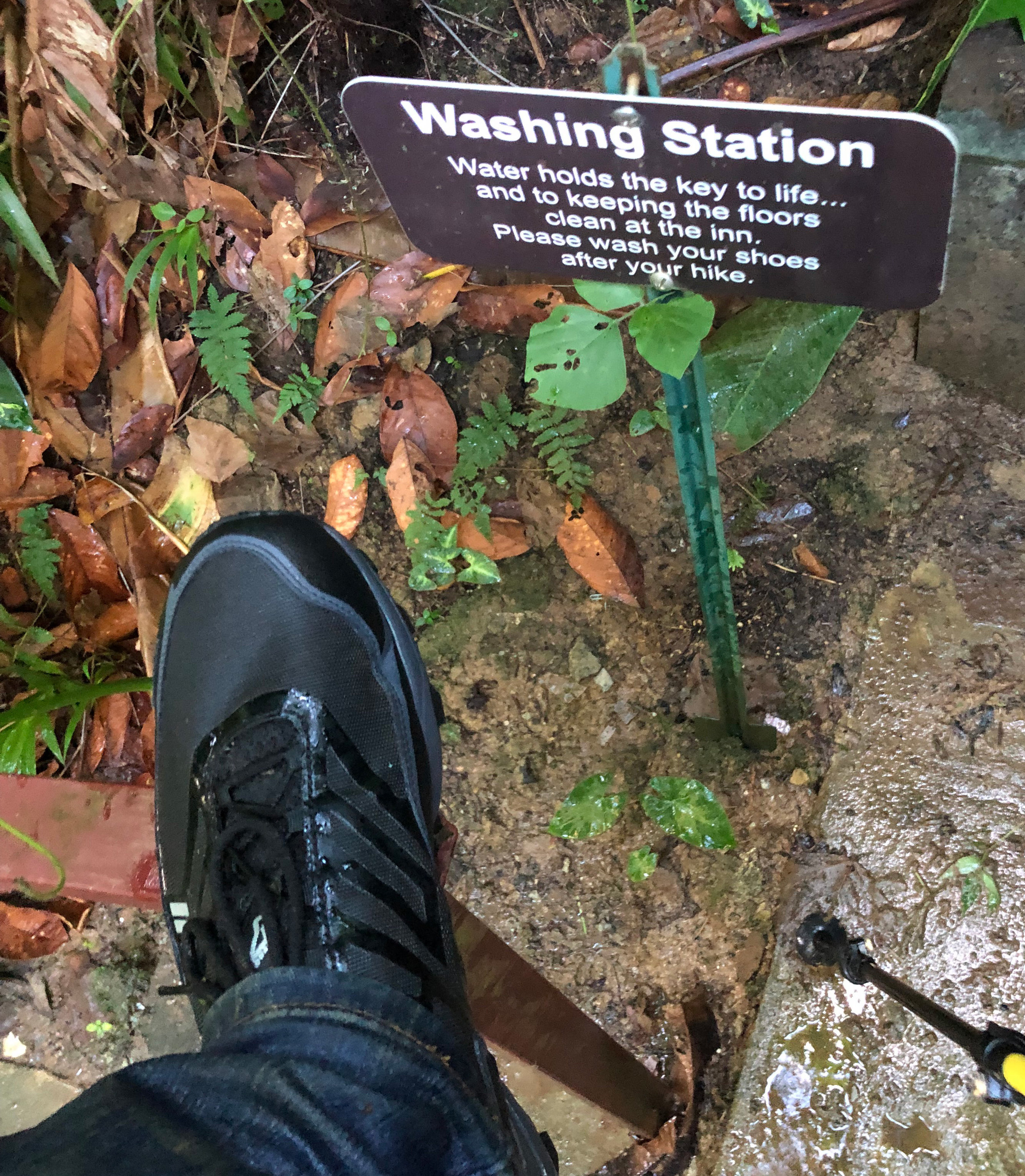
They wash off clean and when you get home just dry them under a fan. Because they are not open mesh they also help keep your feet dry.
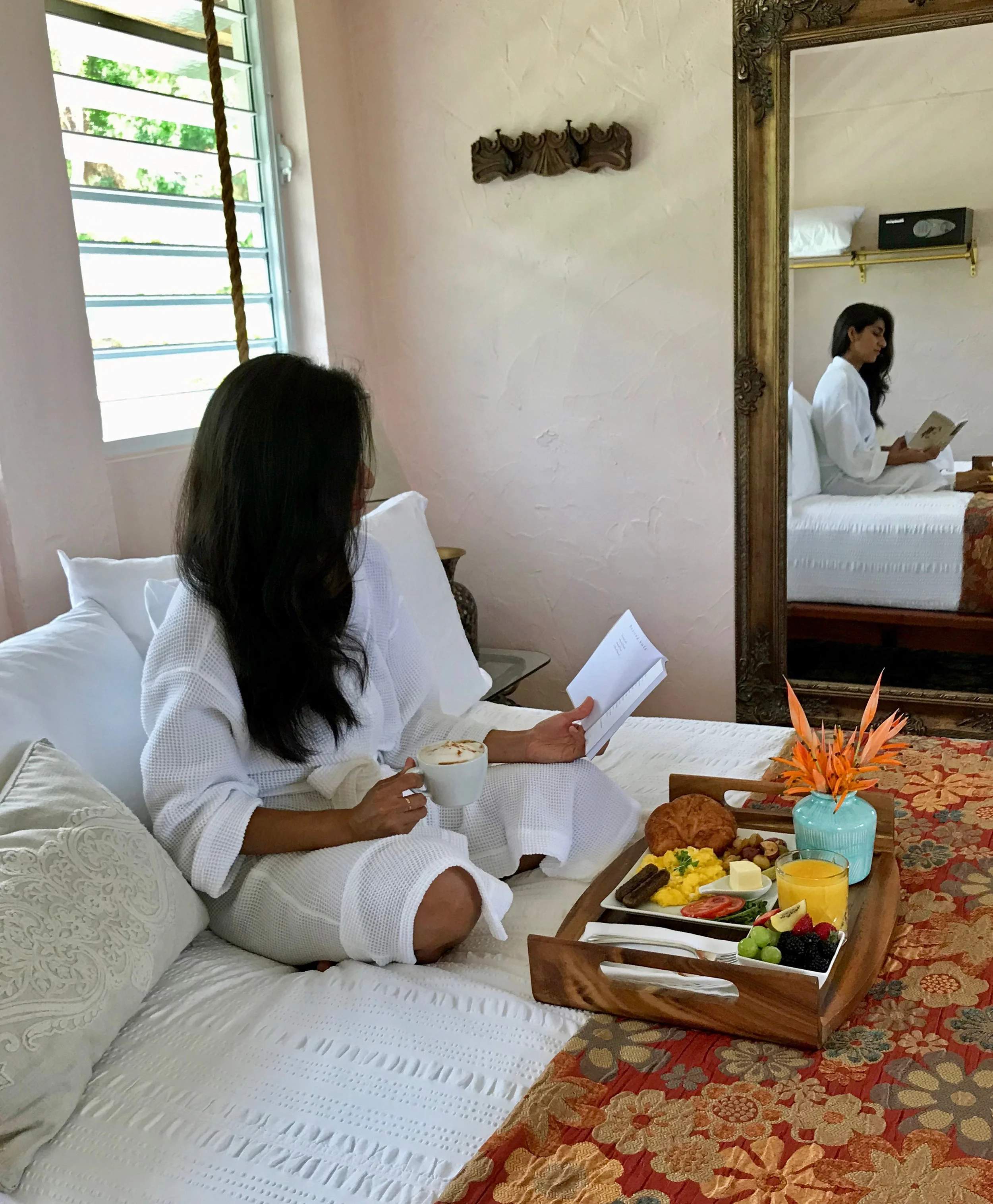
Let us spoil you at the Rainforest Inn
When you stay at the Rainforest Inn you have options. Think of us more like a boutique hotel. Instead of joining the conversation with other guests at the breakfast table you can choose to be served on your private porch or even bring a tray to your partner in bed. Let us help you make your stay as romantic as possible!
You've read our reviews. You know about the amazing breakfasts we serve but perhaps you don't know about some of the other options available for our guests.

Every breakfast is served with fresh fruit or another special addition, such as our house made blueberry chia compote pictured above. Guests may choose from freshly roasted gourmet Puerto Rican coffee, as well as decaf, tea, chai, and fresh juices. On Sundays, we also serve our popular espresso martinis as a special brunch treat.

A breakfast tray served to the jungle suite for breakfast in bed
We also offer a special breakfast in bed tray with champagne for an additional charge, which can be ordered the day before. Guests may also request add ons such as a delicious picnic lunch to take along on a hike. One of our favorite spots to enjoy a picnic is the waterfall pool at the end of the Lost Machete hike.
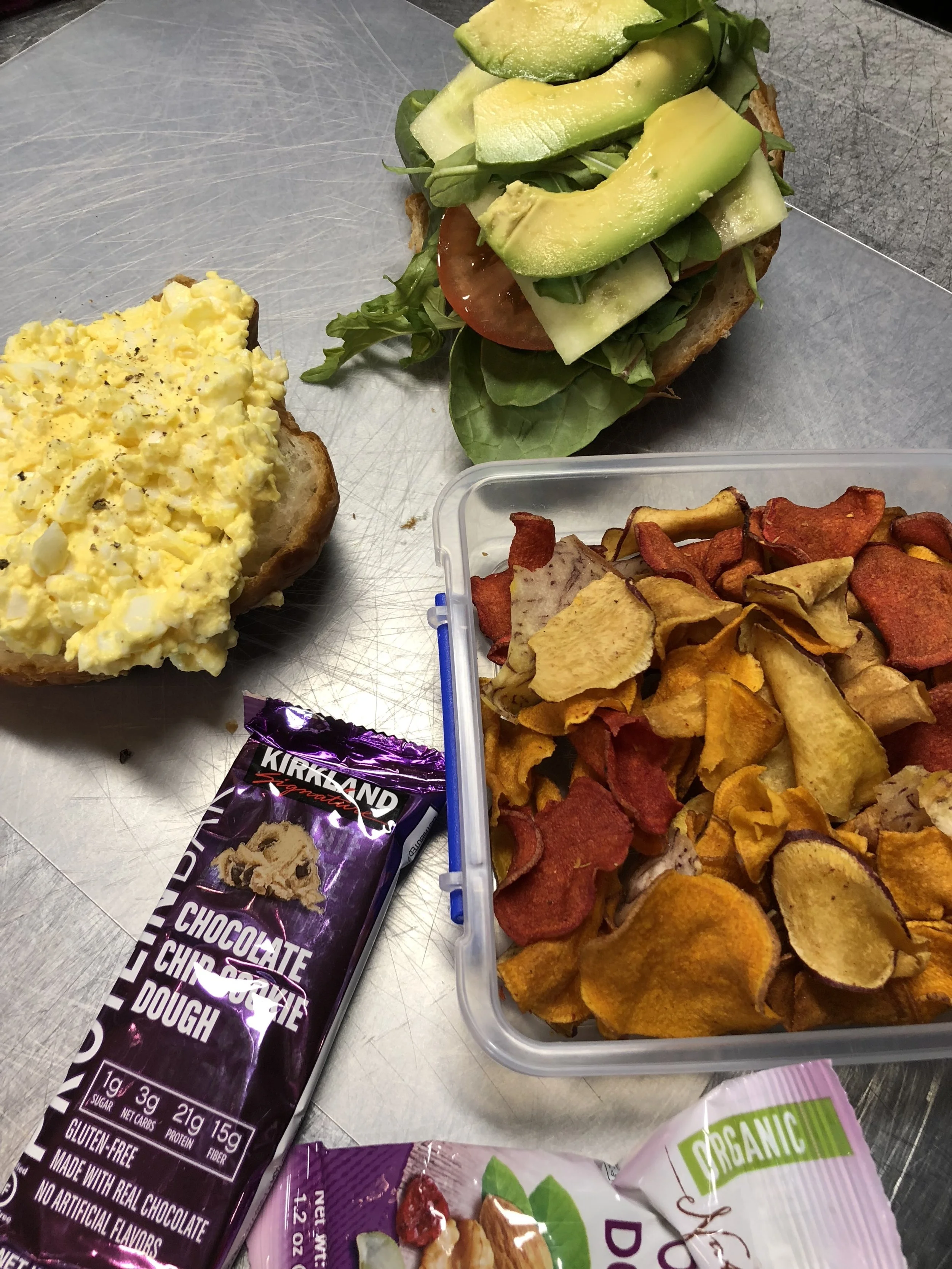
One of our picnic lunches. We offer several vegetarian options.
The safety and privacy of our guests is our primary goal. We have two secure gates and a mile long private driveway. Our large suites are designed with clever privacy screens, fogged windows, and curtains which also insure privacy. In keeping with our goal of privacy those guests who want a romantic breakfast alone together on their private porch can let us know (using our "in house" text message system) that they wish to be served "en suite" or they can opt for the special romantic breakfast with extras for an additional charge.
Don’t miss our updates on upcoming events, new stories, useful tips, new availabilities and last-minute cancellations. We invite you to sign-up now so we are in contact :)
El Yunque's El Toro Trail is Open!
El Toro Trail, the most adventurous hike in the El Yunque trail system is open! It's the closest trail to the Rainforest Inn. See the amazing cloud forest of El Yunque. Hike to the tallest peak. It's less than a three-hour hike.
Our favorite trail, the El Toro trail, has been cleared of all the hurricane Maria debris. The trail is in better hiking condition than it was before hurricane Maria! The El Toro Trail connects to the Tradewinds trail making it the longest trail in El Yunque.

Video showing the drive to El Toro trailhead from the Rainforest Inn
The El Toro trail is not just our favourite because it's so close to the Rainforest Inn. We also love how high it goes and the cool air you experience up there, El Toro is the highest peak in the El Yunque National forest. You will, literally, be hiking in the clouds. This is the famous "cloud forest" or "dwarf forest" of El Yunque.
Don’t miss our updates on upcoming events, new stories, useful tips, new availabilities and last-minute cancellations. We invite you to sign-up now so we are in contact :)

Welcome to the El Toro Trail. Celena has plenty of water bottles and is wearing sturdy trail shoes.
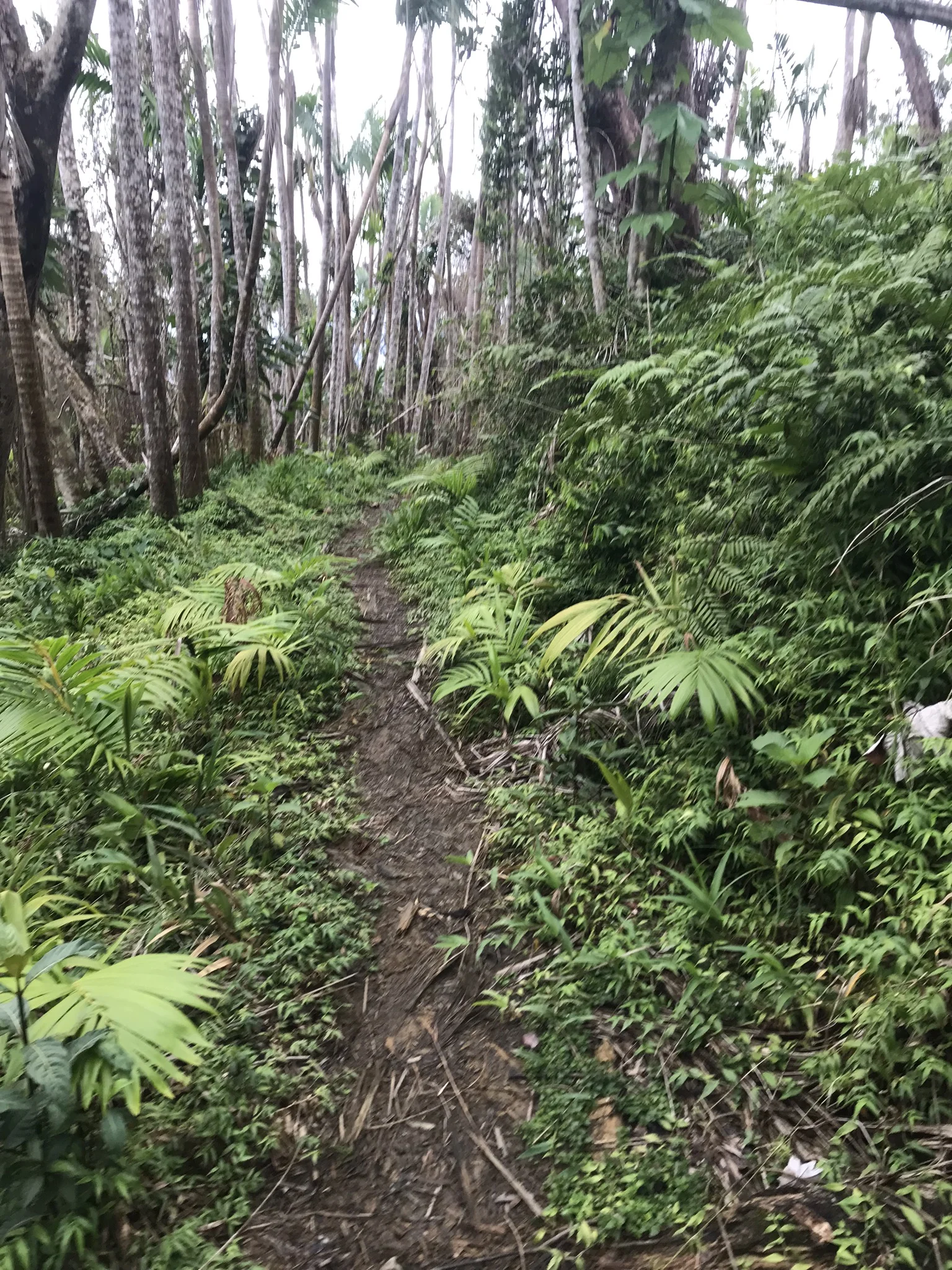
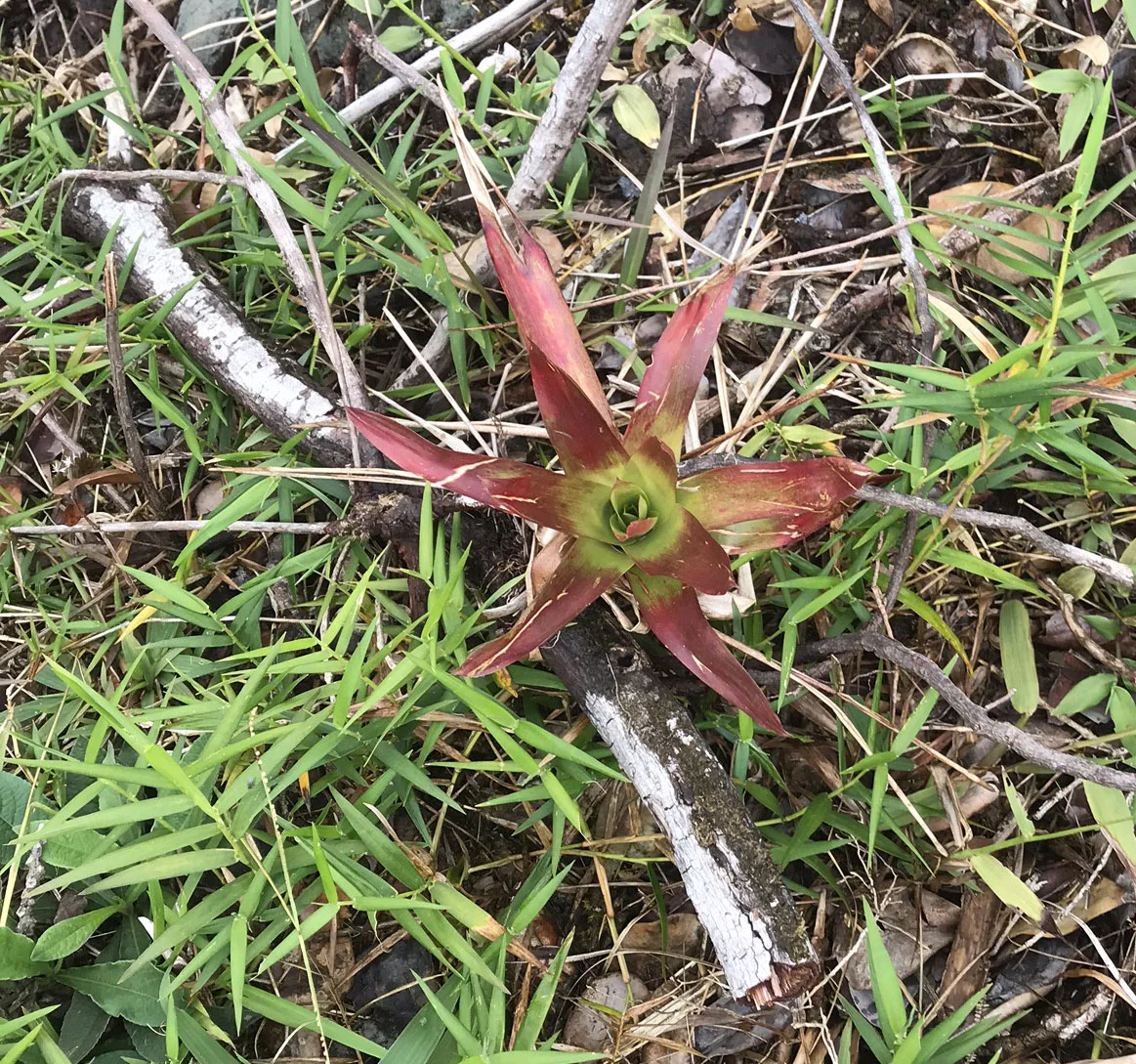
Take your time and look at the unusual dwarf trees. Admire the bromeliads, many epiphytes, mosses and orchids. Prolific nature is all around you.
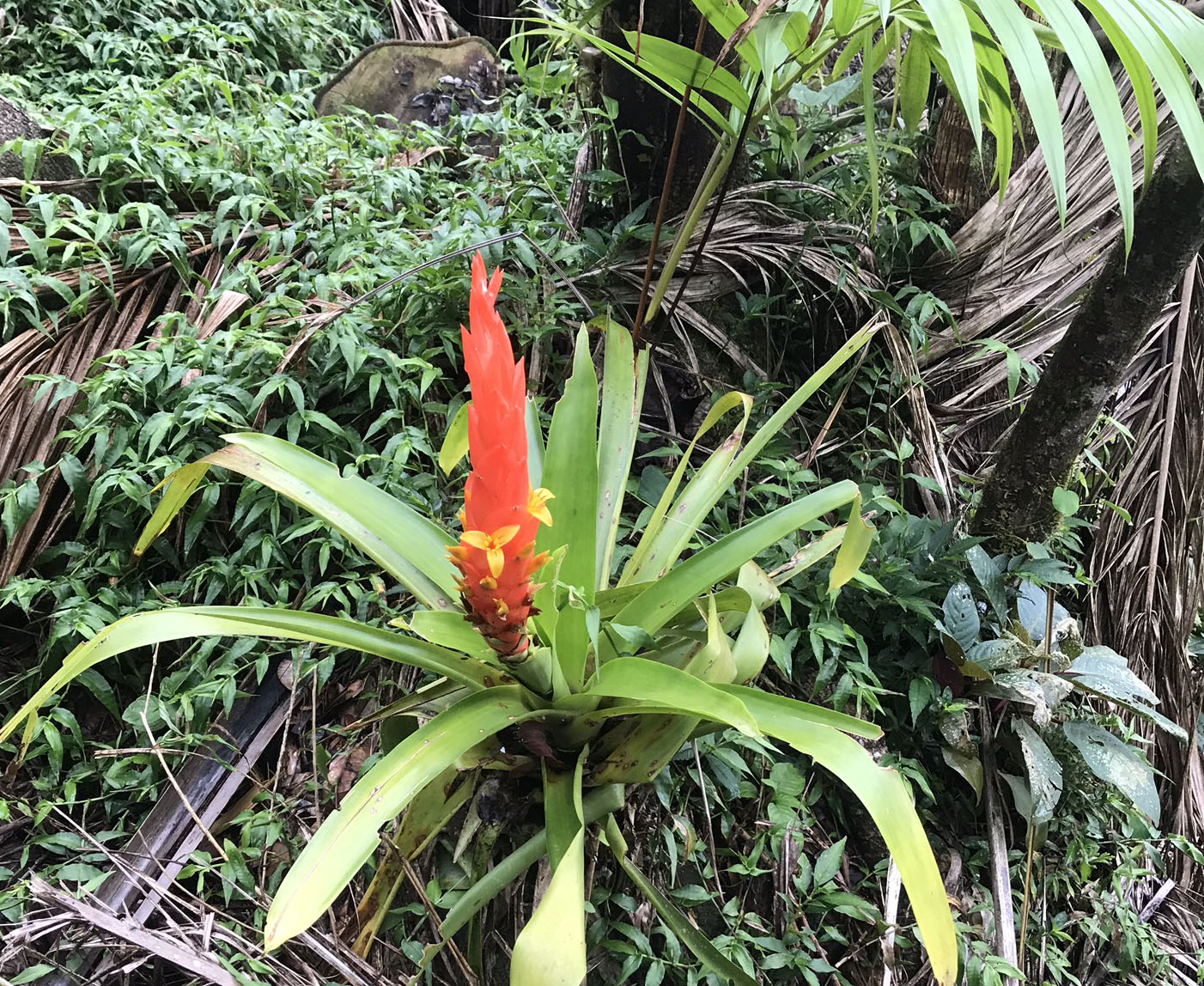
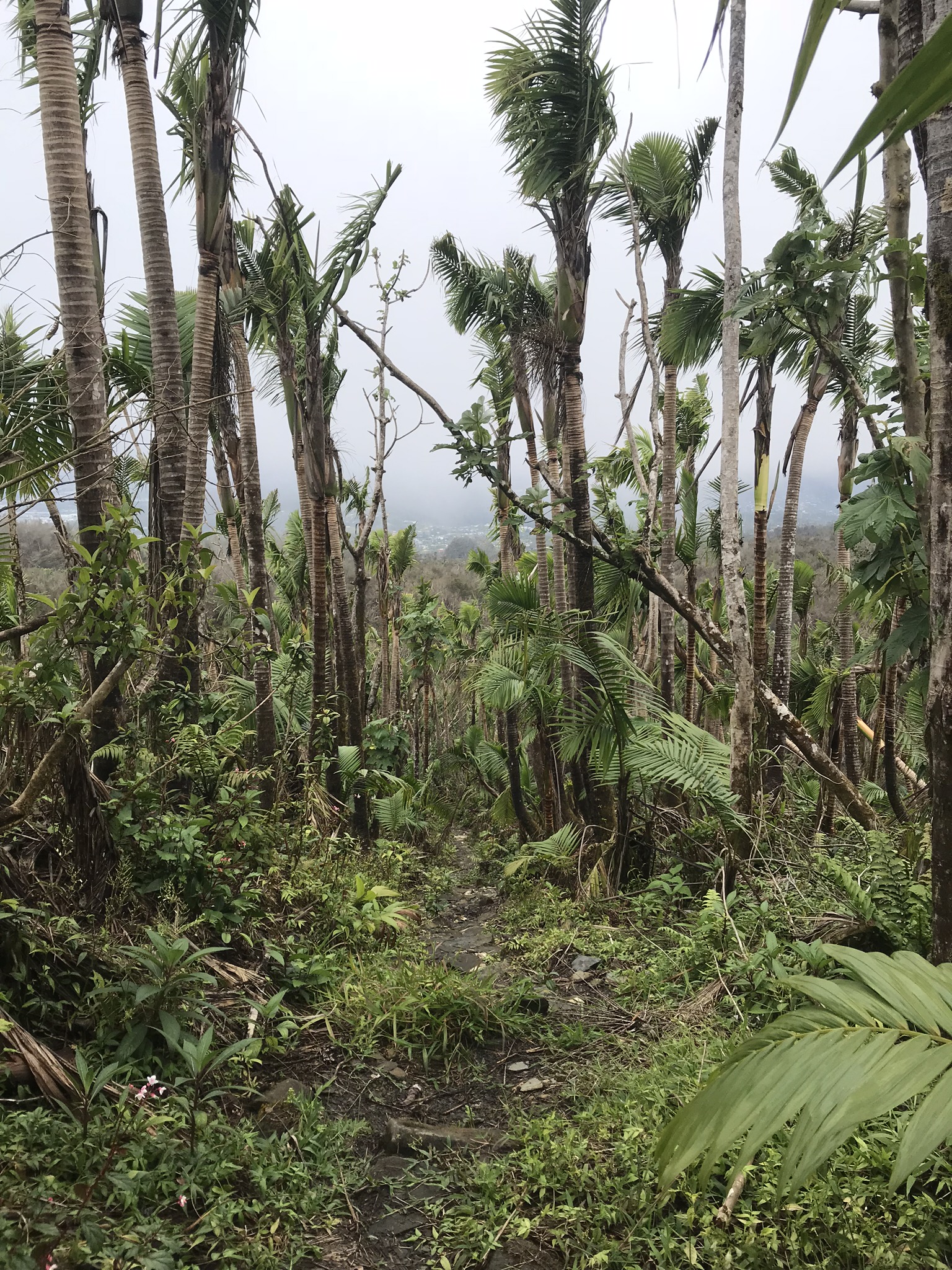
As you hike up El Toro Trail you will notice, very quickly, that the change in altitude brings refreshing cool crisp air. The trail used to be very muddy before hurricane Maria because the canopy covered most of the trail but now it is dryer because it is exposed to sunlight.
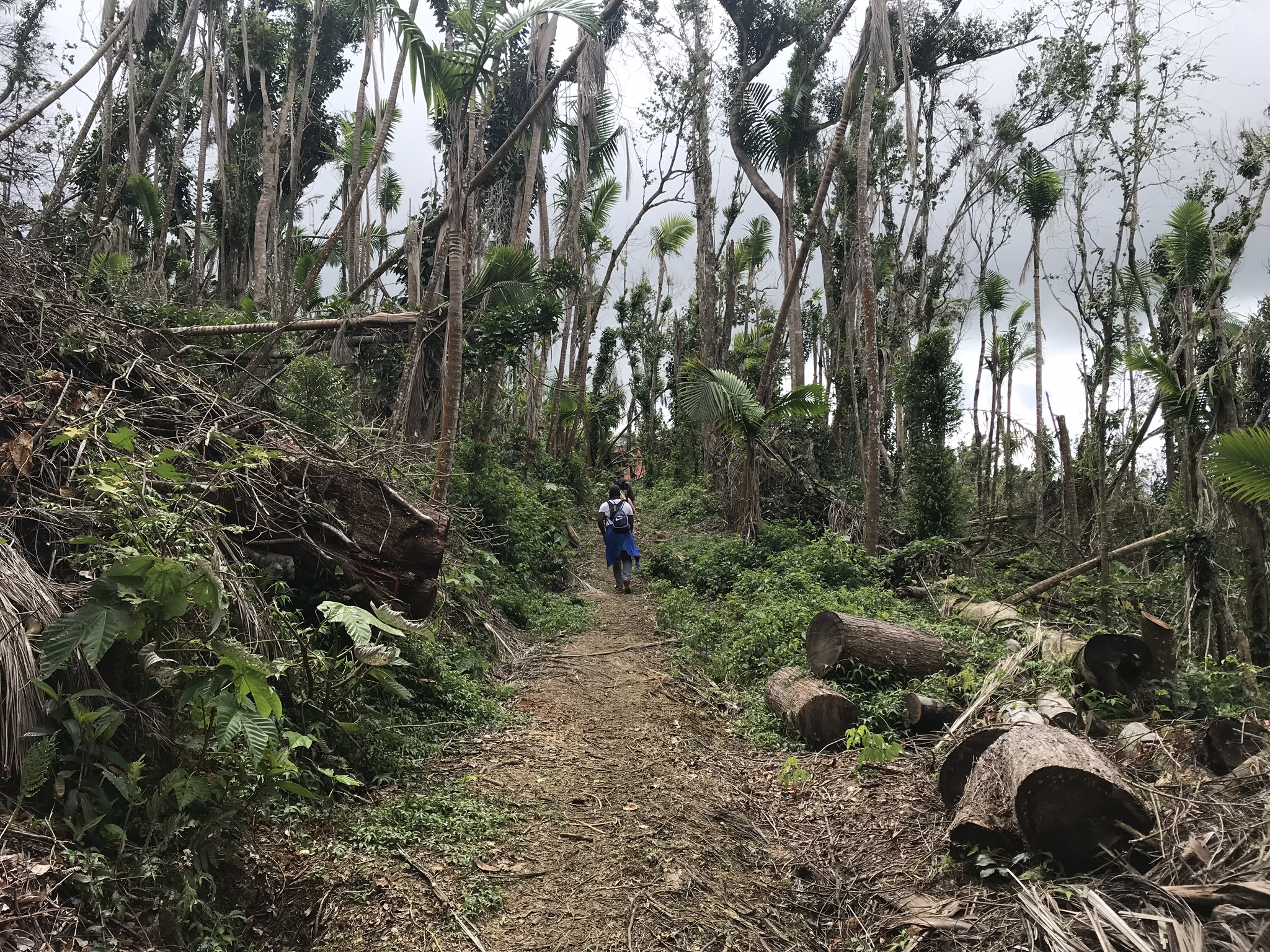
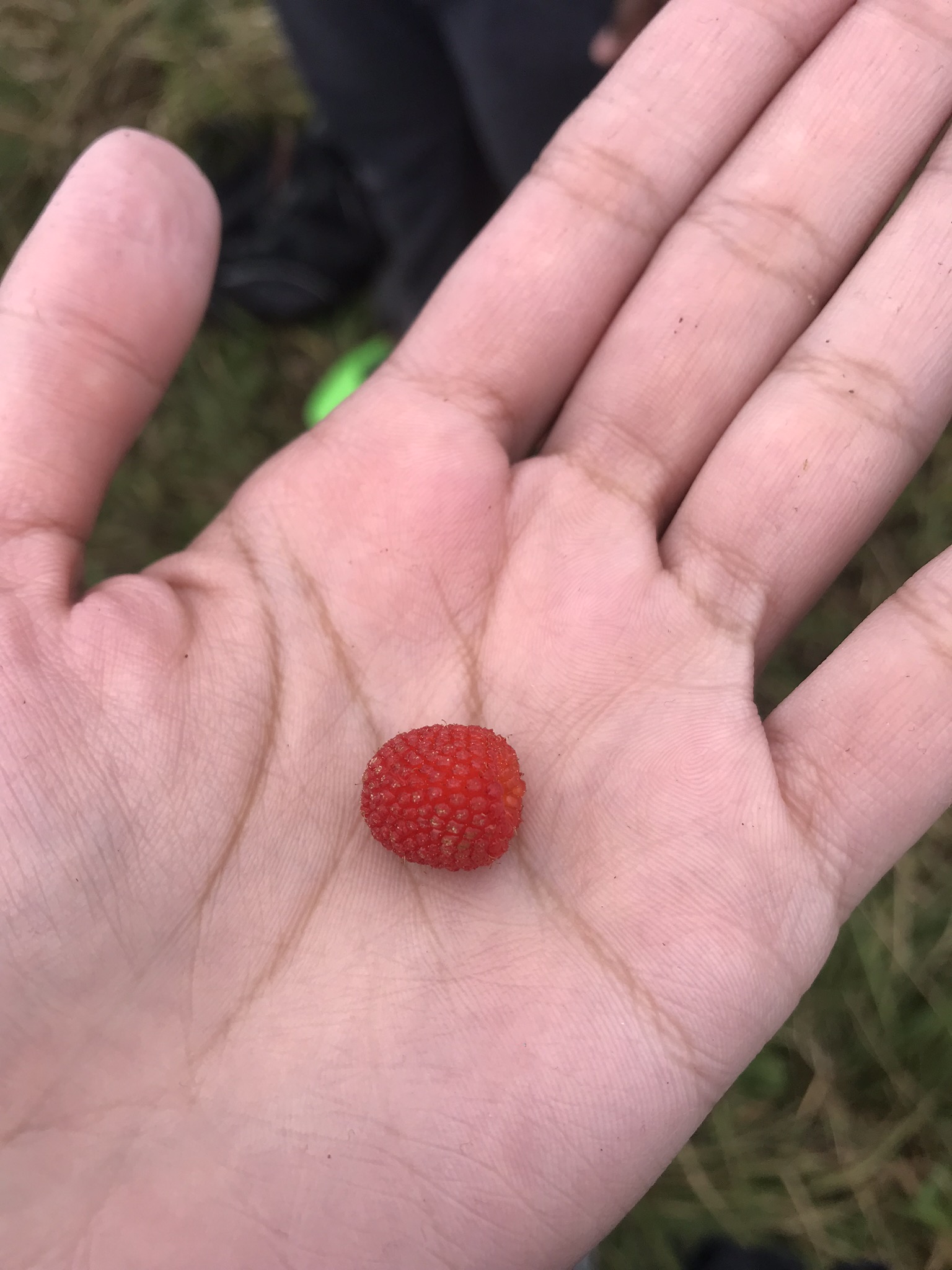
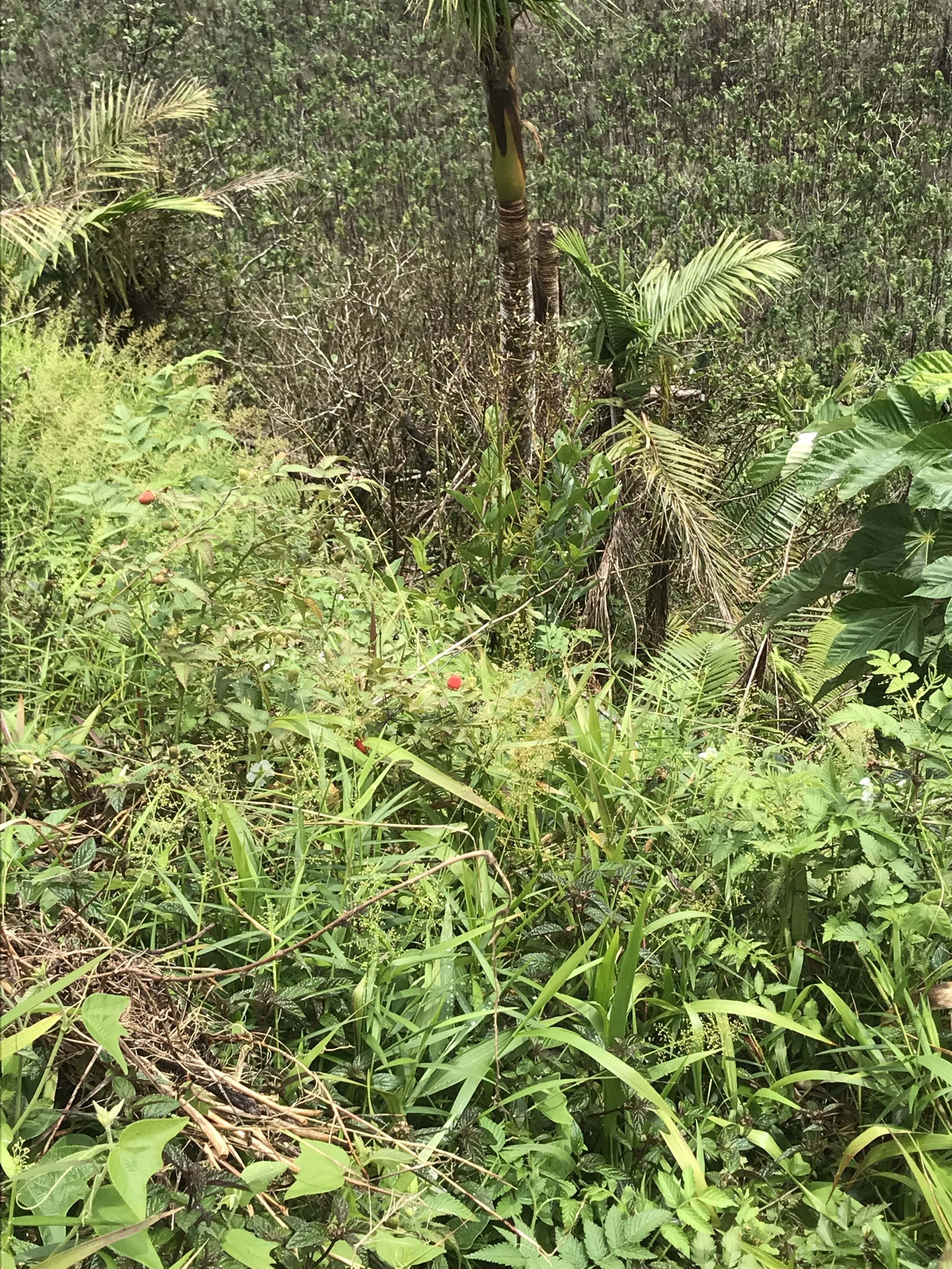
We are a little reluctant to reveal this but there are secret raspberry bushes on the El Toro peak. The berries are succulent and delicious, especially after the long hike.
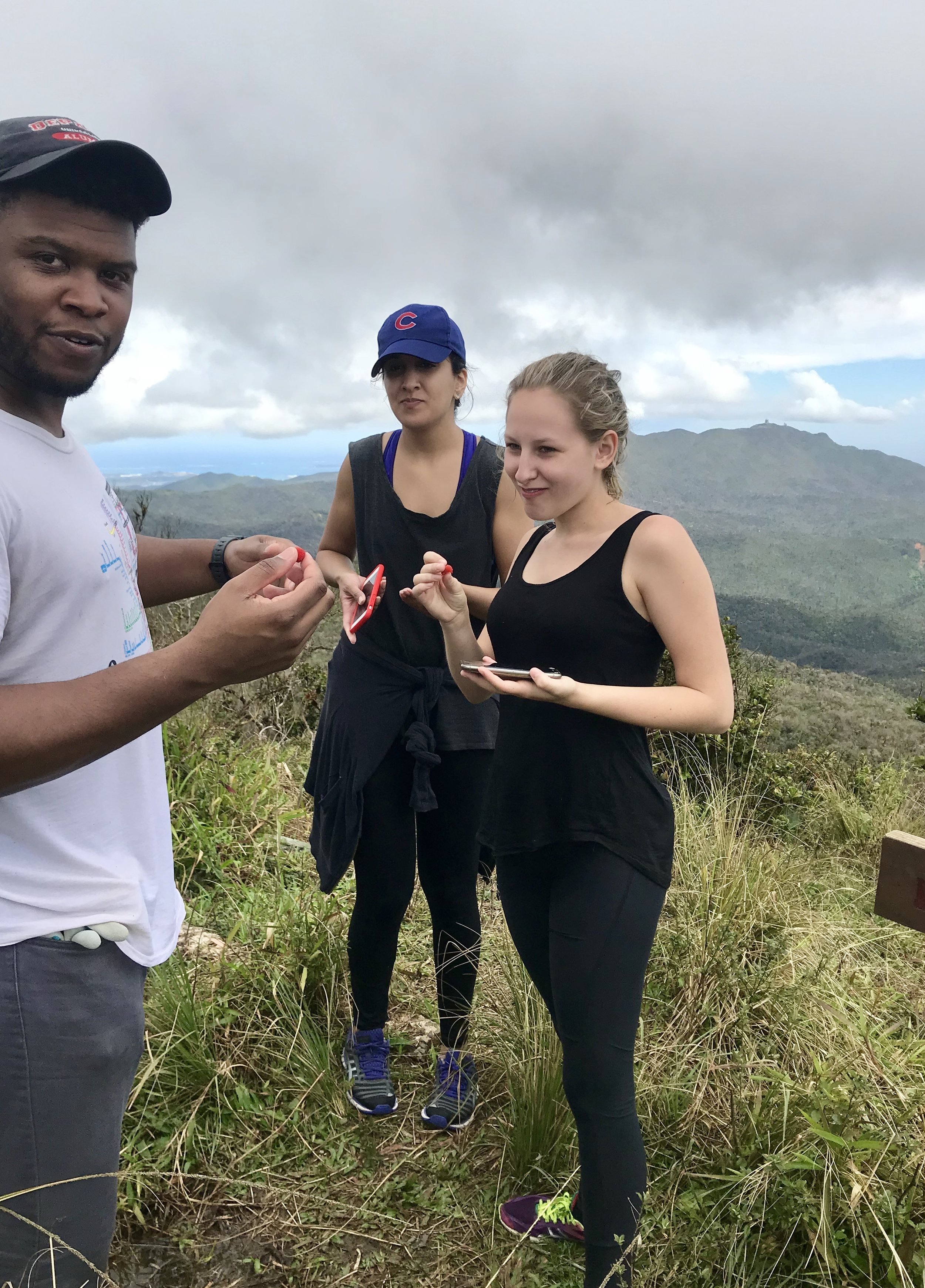
The real reward is the amazing view from the top of El Toro when you reach the trail's end.

The view is tremendous!

This is a panorama from the peak. You can see the Atlantic and the Caribbean sea!

Hiking Trails in El Yunque after Hurricane Maria
More areas of El Yunque are open now including El Toro Trail and La Coca Trail. The forest service is working on opening up 191 further up so that more trails will be open. The closest trail to the Rainforest Inn: the El Toro Trail, is an amazing hike up the tallest El Yunque peak
In February Renée and I went out for a quick drive with our dogs to see how the work is going in the central area of El Yunque and found some areas open. Now in October 2018 there are even more trails open. Scroll to the bottom for the most recent infographic showing everything that is open. Our two favourite hikes the El Toro Peak trail and the La Coca trail are open. Of course our private trail is open too and our guests have been doing that (with great fun) and we have a video about our trail posted right after we cleared it: youtube video here. Our private “Lost Machete” trail has two forks now so you can explore more pools and waterfalls. There is even a spot to pitch hammocks.
Don’t miss our updates on upcoming events, new stories, useful tips, new availabilities and last-minute cancellations. We invite you to sign-up now so we are in contact :)

Relaxing on the Rainforest Inn’s “Lost Machete” Trail. We furnish hammocks (just ask).
We went across to route 191 using the short-cut from the Rainforest Inn on route 9966. It only took about fifteen minutes to arrive at La Coca falls. At the La Coca falls bridge there were two security guards who had a lot of helpful information as well as photos of the work being done. This was as far as they will let tourists to go up 191 in March but now you can go up route 191 to the La Coca trailhead and to Yokahu Tower.

Everyone takes a "selfie" at La Coca Falls!
After visiting La Coca falls we went on over to Angelito Trail which is the only "easy" hike that is open now. The trail is very short and you can see from the following photos how wide the trail is. The Angelito Trail is closed temporarily while they build a bridge over a little stream (this trail seems to be intended as nearly passable for the disabled as I can envision, after the bridge is repaired, a really rugged wheel chair making it with someone strong pushing it).

The trailhead for Angelito Trail. Gracie and Simonne are patiently waiting while we talk to the guard.

You can see how easy the trail is. It is very wide and smooth.
We follow El Yunque Forest Service on twitter and in one of their recent posts they talked about Angelito trail saying it was "partially" open. I was worried about that but it turns out that they mean the bridge over a little stream on the way in is out (and now in October they are repairing that).

The little bridge is out but it is no trouble crossing on the rocks
The forest service tries to make everything as easy as possible. The trails that they open are well marked and cleared. My favourite trail is the El Toro peak trail and that one was closed for years well before hurricane Maria (even though many people still hiked it) because it is decidedly not an easy trail. Our "Lost Machete" hike is also fairly difficult with scrambling arroyo crossings in places and lots of slippery mud. And now the La Coca trail is open and that one is muddy in places and it is even possible to get lost. Our guests at the RainforestInn tend to be adventure travellers who love our suggestions for long hikes that aren’t easy so lucky for us there are adventurous hikes for us to recommend!

The forest service has put in excellent portable bathrooms everywhere as well as places to wash your hands. But no garbage cans so remember to bring your own garbage bags.

Nice bench at half-way point on the Angelito Trail so that Simonne and Gracie could rest.

Refreshing deep swimming hole at the end of Angelito Trail


Design Tech Students Volunteer in Puerto Rico
Design Tech students stayed at the Rainforest Inn and volunteered at a local High School to provide educational relief by teaching design thinking. They also explored the Rainforest on our "Lost Machete" hike. They hope to return to Puerto Rico someday and stay at the Rainforest Inn as interns.
Design Tech High School’s mission is to build the understanding in students that the world can be a better place and that they can be the ones to make it happen. The school teaches design thinking which is an empathy-based problem solving method. One of the ways students learn design thinking is through the school’s intersession program. Students take a break from core academics for a period of two weeks, four times a year. The intersession days are split into two sections: design lab in the morning, where students are taught design thinking and are able to practice the method in a multitude of different projects, and exploration classes in the afternoon. These classes encourage the surrounding community to teach students anything from visual arts and cooking to rock climbing and wearable technology from this the students gain real world experience and explore topics that interest them.

Students at Rainforest Inn interviewing Bill Humphrey
Don’t miss our updates on upcoming events, new stories, useful tips, new availabilities and last-minute cancellations. We invite you to sign-up now so we are in contact :)
Right before the November intersession, a staff member at the school, Robert Bolt, came into one of our classes and introduced the idea of going to Puerto Rico to bring design thinking to a school located there. When pitching his idea, he acknowledged that Hurricane Maria had caused a lot of damage to the Puerto Rican infrastructure and the economy, but with most of the relief work already focused on these issues, he felt it would be better suited to our skills if we provided educational relief to a local school, as it would be a perfect opportunity to help rebuild a school with design thinking as part of their curriculum.
The idea was such an amazing opportunity that 12 students quickly signed up for it. The November intersession was spent figuring out how to make the trip a reality and searching for a school to work with. Luckily, the Rainforest Inn offered to let us stay for free, making this trip possible. After many hours of planning our trip and researching Puerto Rico, the January intersession rolled around, and all 12 students, Bolt, and Alma, a parent of one of the students, boarded the plane to Puerto Rico.

Students working together at Escuala Francisco Manrique Cabrera
While in Puerto Rico, we worked with Escuela Francisco Manrique Cabrera, or FMC. The first day we were there, we introduced ourselves, toured the school, and danced with the students. The next day, we taught a workshop centered on design thinking, challenging the students to design a perfect wallet for their partner. The students were very engaged, and came up with amazing prototypes for the challenge. At the end of the workshop, Glenda, one of the students in the workshop, told us that she would never forget what we taught her. There are honestly no words to describe how it made us feel, knowing that we had only spent three hours with them, and they were already asking tons of questions about design thinking and how they could make it part of their school, showing us that it was definitely possible to fulfill d.tech’s mission of changing the world.

At FMC school with Back row, left to right: Kirby Kromelow, Malakhi Martinez, Anya Karanov, Ross Fulkerson, Tatiana Fakoukaki, Matthew Silverman, Tyler McMahon; Front row, left to right: Georgina Fakoukaki, Daphne Palmeter, Ricardo Rosselló (Governor of Puerto Rico), Jose Obregon, Ally Shirman, Maria McAlister-Young
Later on in the trip, we attended a symposium focused on bringing computer science programs to all schools in Puerto Rico. We participated in brainstorming and refining the framework for the CS4ALL initiative, and presented our ideas in front of the entire audience. This initiative was supported by many local universities and businesses, as well as the Department of Education and Ricardo Rosselló, the governor of Puerto Rico. It was an amazing trip full of change, both in Puerto Rican schools, and in our own lives.

At the trailhead for the Rainforest Inn's "Lost Machete Hike" From left to right: Ross Fulkerson, Daphne Palmeter, Anya Karanov, Maria McAlister-Young, Georgina Fakoukaki, Kirby Kromelow, Malakhi Martinez, Tatiana Fakoukaki, Ally Shirman, Matthew Silverman, Rob Bolt, Jose Obregon, Tyler McMahon, Alma Karanov
We are so grateful for Bill and Renée’s hospitality in letting our group stay at the Rainforest Inn five nights for free. Without this, we may have never been able to get ourselves to Puerto Rico and work with the students and staff at FMC. Before arriving to the Rainforest Inn, we all had low expectations for the housing. We’ve heard many horror stories about the conditions in Puerto Rico and seen many pictures that brought us to believe that Puerto Rico is in ruins, creating the idea that the Inn would just be free accomodations to sleep in, and nothing else.
Contrary to our expectations, the Rainforest Inn is is full of luscious greenery, creating a relaxing, open environment for the 14 of us every day after we got back from a day of work. We got to relax inside the comfort of two of the villas on the property. They were full of beautiful artwork, and zen-like design. The ambiance made it incredibly easy to relax and unwind after a busy day in town. In our free time, we explored the grounds of the Inn, including the beautiful hike into the El Yunque Rainforest, which leads to a waterfall with a swimming hole and astonishing views of the forest. With the damage Hurricane Maria caused, the canopy in the rainforest is almost entirely gone, meaning we could see all the way to the ocean. Usually, the canopy is so thick, it’s impossible to see past the first line of trees, so it was a unique viewing experience for our group.

Back row, left to right: Kirby Kromelow, Malakhi Martinez, Anya Karanov, Ross Fulkerson, Tatiana Fakoukaki, Tyler McMahon; Front row, left to right: Georgina Fakoukaki, Daphne Palmeter, Julia Keleher (Secretary of Education of Puerto Rico), Jose Obregon, Maria McAlister-Young, Ally Shirman, Matthew Silverman
Hopefully, this trip marks the starting point of a lasting partnership between d.tech and the Rainforest Inn. Being surrounded by the rainforest and working with Bill and Renée has taught us so much. Many students expressed an interest in going back to Puerto Rico for a gap year and working as a volunteer or intern at the Rainforest Inn. In the future, working with the Rainforest Inn, will allow us to maintain a relationship that is beneficial for d.tech students’ learning experiences, and more importantly, the Puerto Rican community.

Opening up the Lost Machete Trail
The Rainforest Inn's private trail into the El Yunque jungle is the only access we know of that is completely private, open only to our guests, and which features both an amazing deep pool and a spot to pitch hammocks near the waterfall.
The Rainforest Inn has always been lucky in the volunteers who choose to come here to stay for a while in El Yunque and help out. This time the Coyle family visited and boy were we lucky to have their help. They have a farm in Franklin County, MO called "Moy Mell" and they found out about us on the wwoof USA site because their farm is also listed there. Their farm is a co-operative CSA called Avant Gardens. Joe, Charissa and Aster arrived and immediately started working on several projects with priority for opening up our trail. Joe is also an experienced contractor and skilfully completed other jobs while he was here many of them which helped with our progress towards 100% "off-the-grid" sustainability.

Joe was undaunted by the amount of trees which were down across the trail.
The Coyle family not only opened up the trail they also made some improvements to the trail. They put in concrete block steps in the muddy beginning and suggested that we gradually put more in as time permits as it is a real jungle trail not at all like the paved trails that are famous in the national forest central area (which is run more like a park). We agreed that the trail does need to be made a little easier to hike.
Don’t miss our updates on upcoming events, new stories, useful tips, new availabilities and last-minute cancellations. We invite you to sign-up now so we are in contact :)

Aster is taking a water break while she helps move the fallen trees out of the way.
One of the new improvements to the trail is a fork which leads to the right for access to our new hammock pitching area and to the left for the deep pool above the Espiritu Santu waterfall. Remember to ask us for a hammock to take with you if you want to pitch it and hang out in private peace to enjoy one of the world's most amazing nature hideaways.

Sign that Charissa made showing the new fork near the end of the trail for the hammock pitching area.
The Coyle family worked long hours every day they were here and trail clearing is not easy work. I went in a week or two before they came and checked the trail markers, putting in some new ones, and it was exhausting climbing up and around the fallen trees. It's so much nicer now that the trail is open. Even though it's a true jungle hike it is not very long (only a mile) and our visitors of nearly all abilities can make it.

Pulling branches out of the swimming hole. Joe had to chain saw them free
Aster Coyle wrote some poetry while she was here:
“Find the words in the shadows between leaves; Find your soul in the sunlight between trees; Look into the sky & dream. All of the world’s peace is as easy as wishing.”
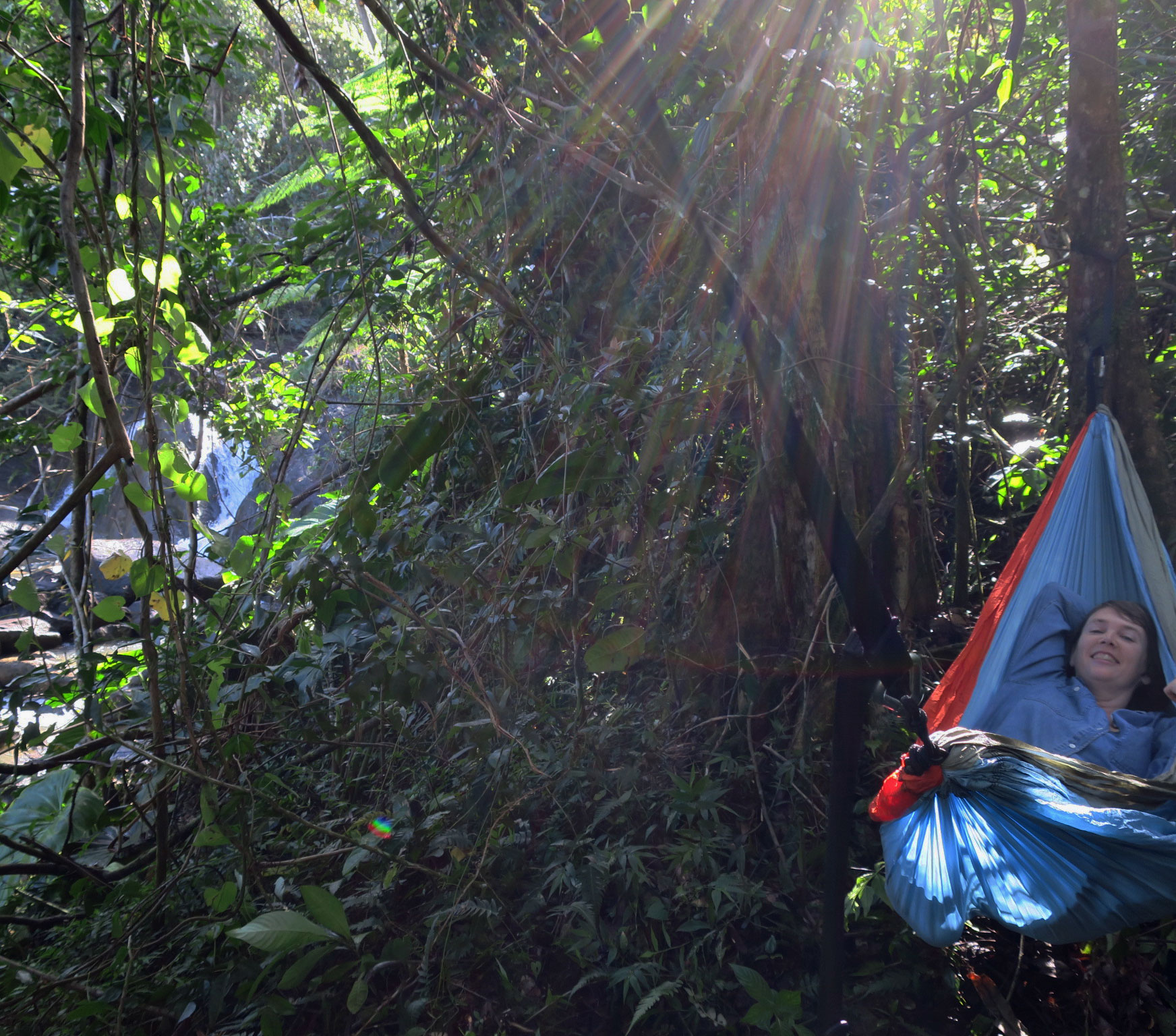
Nothing is more peaceful than relaxing in a hammock under the jungle canopy by one of the waterfalls on the "Lost Machete" trail.

Christmas in Puerto Rico after Hurricane Maria
Christmas ( Tres Reyes ) in Puerto Rico after hurricane Maria will be different but, as always, it is about the children.
Renée and I love Puerto Rico and living up here in the El Yunque rainforest. Every twenty years or so a "high wind" comes along and there is some hardship and adjustments. We are always prepared and have the inn back in operation within weeks of any storm but not everyone is as lucky. This season we are working with the community of Rio Grande (our local city) to give back by helping the children have a Christmas or Three Kings.

The Rio Grande mayor Angel "Bori" González and police commissioner Sr. Escobar are seated in their emergency office. In this photo Renée and I are just starting the interview.
A former guest, Michelle Roover, suggested a "gofundme" campaign to help finance the Rainforest Inn's hurricane difficulties (we were prepared for nearly every contingency with our vast water storage cisterns, new ultra-quiet generator, and solar panel solutions -- except for the one where nearly 95% of our upcoming guests cancelled their winter vacations with us). We didn't feel right about asking for personal donations (especially from beloved former guests) but we thought of what an excellent opportunity it would be to help our local community so "Christmas Relief for the children of Rio Grande GoFundMe" was born. We have collected over $1500 so far both from that page and from family and friends donating directly.
You can go to our Puerto Rico Podcast page for a link to the different ways to stream our podcasts including the latest, our interview with the Mayor about distributing Christmas gifts and his update on the hurricane relief his office has been accomplishing.

Renée, Laurie Michaels and Melina Devoney posing during their present wrapping
We will get some more photos and maybe a video when we distribute the gifts to the children with the Mayor. Hopefully we will have enough presents for all the children that show up and avoid a riot.

Using our gym as a workspace to wrap the presents.
Don’t miss our updates on upcoming events, new stories, useful tips, new availabilities and last-minute cancellations. We invite you to sign-up now so we are in contact :)
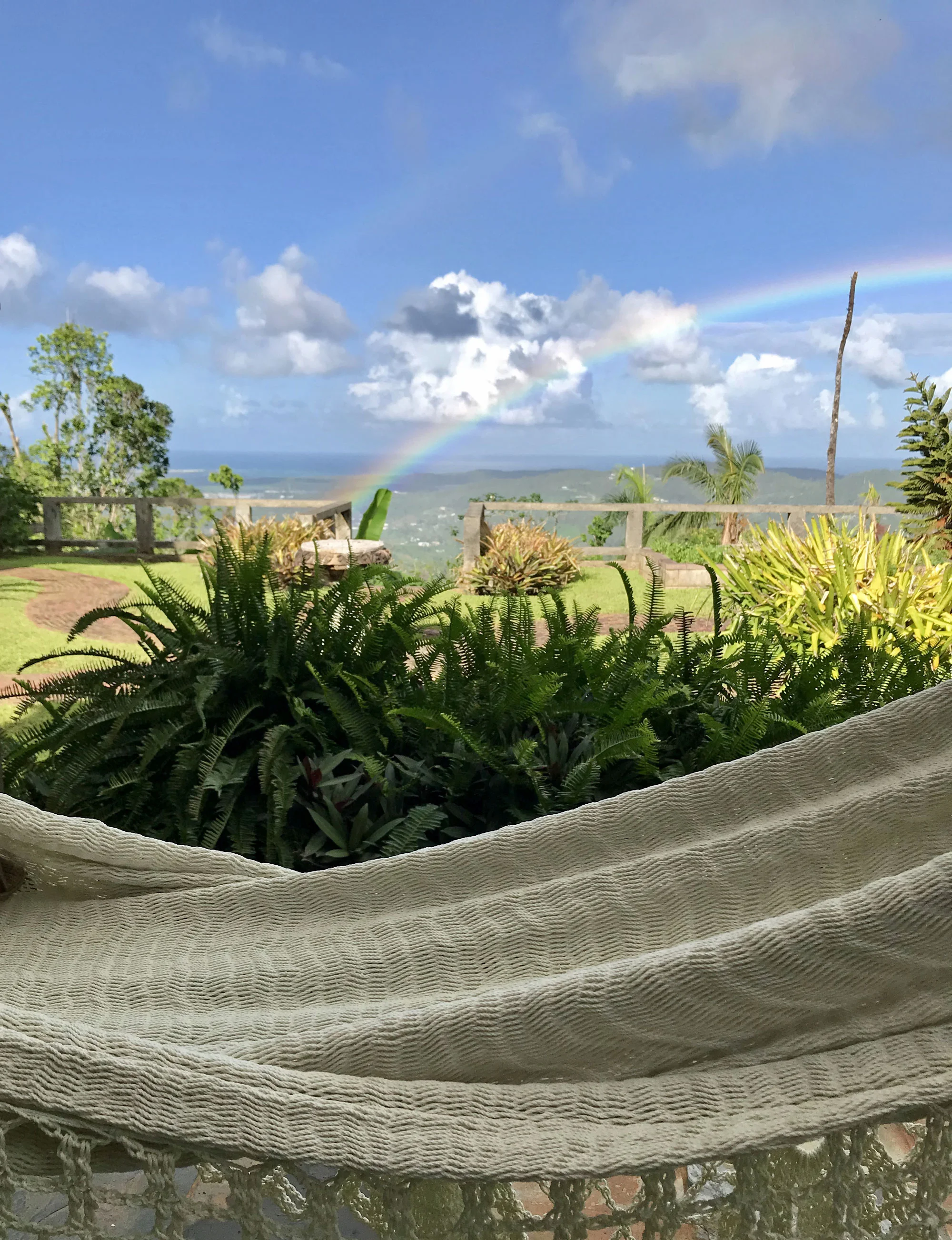
Relax at the Rainforest Inn
We were lucky to host some guests recently from England and from San Juan.
Our guests after Hurricane Maria all agree that their stay here has been the most peaceful experience ever. We run our generator (not only located far away but a special very quiet propane one) for four hours in the morning and in the evening. Just read the following quote from our guest comment book:
“A hidden gem is an understatement! Coming from San Juan and being one of the privileged ones of having electricity two months after Maria — the quiet time here was a relief from the chaos of the city. Candles, cold fresh water and beautiful dark skies where stars could be appreciated do to the lack of electricity in the parts of the island below was a perfect combination for a peaceful weekend get-away.”

Our guests from San Juan said: "Breakfasts on the porch are just priceless and delicious besides having excellent taste in all the details of the presentation".
A couple from England stayed here last week for their honeymoon. They also appreciated the amazing quiet peaceful experience we provide. Our location high up in the rainforest at the end of a mile long private road makes all the difference, there is only jungle sounds and peaceful breezes from the Caribbean trade winds.

On their honeymoon from England. They also wrote in our guest registry, She is from Mexico.
“Estuvimos aquí tres noches de nuestra luna de miel. Estuvimos aquí tres noches de nuestra luna de miel. Desafortunadamente venimos seis semanas Después del huracán Maria. Todavía no hay electricidad en muchas partes de la isla. Sin embargo, en el Rainforest Inn encantáremos una joya. Nuestra habitación es espectacular y los desayunos son deliciosos. Bill y Renée son unos hosts estupendos muy atentes y amables. ¡La decoración de las habitaciones es lindísima! Toda la atención que hemos recibido ha sido de primera clase. Queremos regresar algún día.”
Renée and I were so happy that we are still getting guests from Europe and we had the most wonderful conversation with our San Juan guests the afternoon they were leaving (and it wasn't too early for us to share a glass of fine scotch).

Uncrowded Paradise
A cloudy day at the beach. Luquillo is uncrowded and unspoiled this winter season
Stay in Puerto Rico this winter season and visit the El Yunque National forest and our beautiful beaches nearby in Luquillo. I went out with Simonne today to visit Luquillo's beaches and see how ready they are for visitors from the frozen north. We know the Rainforest Inn is ready as we cleaned-up the first couple of weeks after the hurricane.

Luquillo Beach in front of Board Riders. La Pared is a famous surf beach in Puerto Rico.
If you come visit Puerto Rico now you will be able to have the unique experience of visiting Luquillo Beach in high season without a soul around. I was there on a Sunday afternoon (a cool misty day) and Simonne and I had the beach all to ourselves.

Boardriders is a famous surf bar in Luquillo right on the beach. They serve the best mahi-mahi fish tacos and bushwhackers. They, like many other great local places to eat, are open for business after Maria.
We also stopped at Balneario Monserrate, the well-known public beach near the "kioskos" of Luquillo. The main gates were locked and the area near the road looked bad with some fallen trees and brush but a small gate was open and Simonne and I walked right in, stepped over the brush, and walked down to that beautiful beach. It was so incredible to be on this public beach without another person. The coconut palms are all still in a row (this was once a coconut plantation) and the beach and water was very clean and inviting even on a cloudy day.

Off in the distance you can see a couple of people also walking on this beautiful beach. Imagine visiting such a popular location with no crowds! When you stay at the Rainforest Inn we will tell you about some of our favourite places to visit and traveller's tricks that you can use to make your touring really special.

It is even more uncrowded and peaceful at the Rainforest Inn. Everything is green again. The jungle is returning. Our private trail is inviting and we are making many improvements to it.

Project Loon over Puerto Rico
project loon has come to Puerto Rico and looks like shiny flying saucers up in the sky over El Yunque.
Saturday we were stringing up our festoon lights. We had taken them down to secure them before hurricane Maria. Good thing too because that porch that overlooks our koi pond was swept by the top of the breadfruit tree when the storm blew that off.
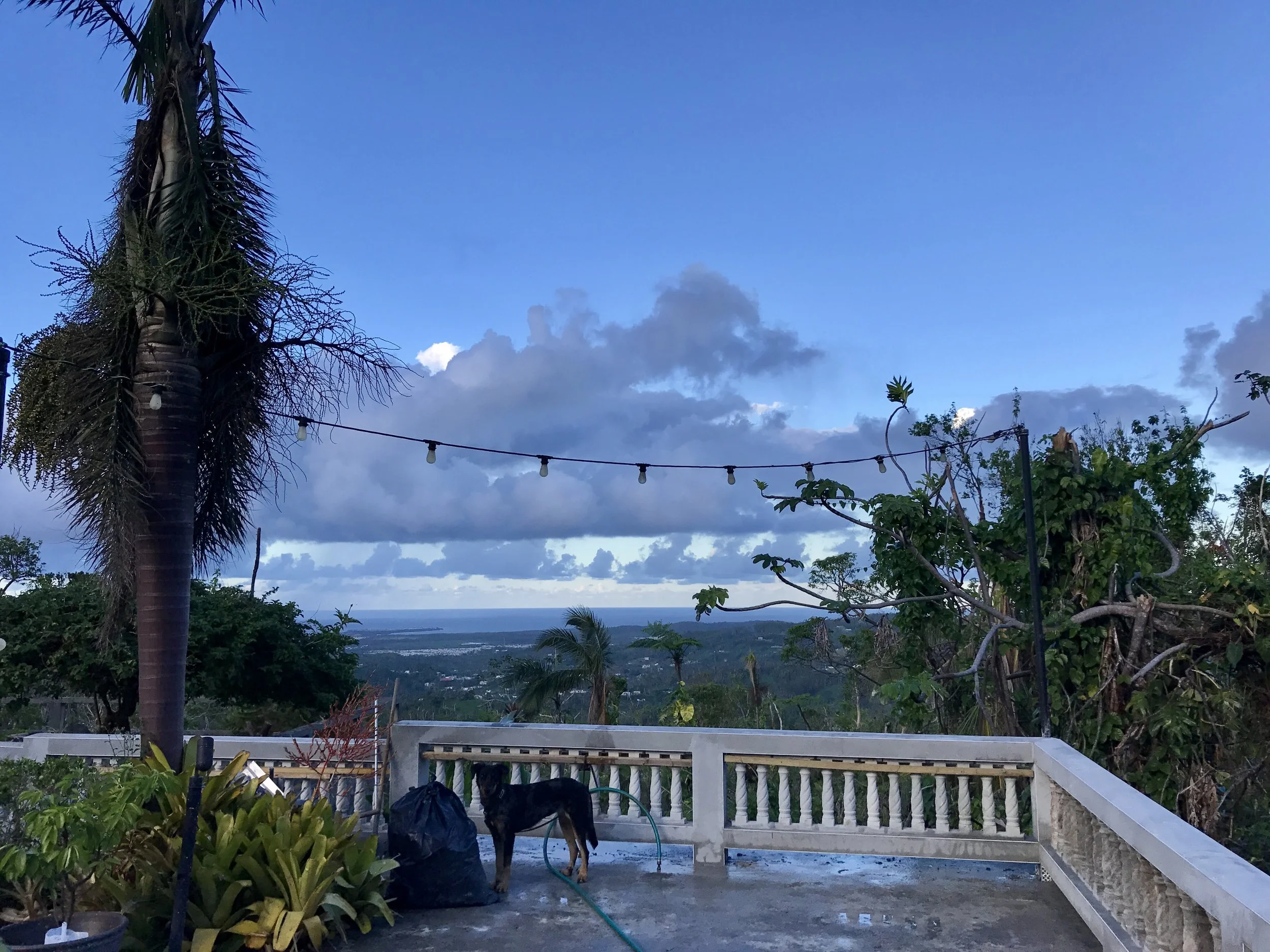
Renée said look up in the sky. That can't be an airplane. For a moment I hoped it was a flying saucer (there are recorded sightings here in the sixties) but then we realized it was a google balloon from project loon.

I took out my AT&T cell phone right away and tried to connect. But even with direct line of sight I got nothing so either it wasn't on or you need Internet first to update your phone first so it can make the correct handshake.
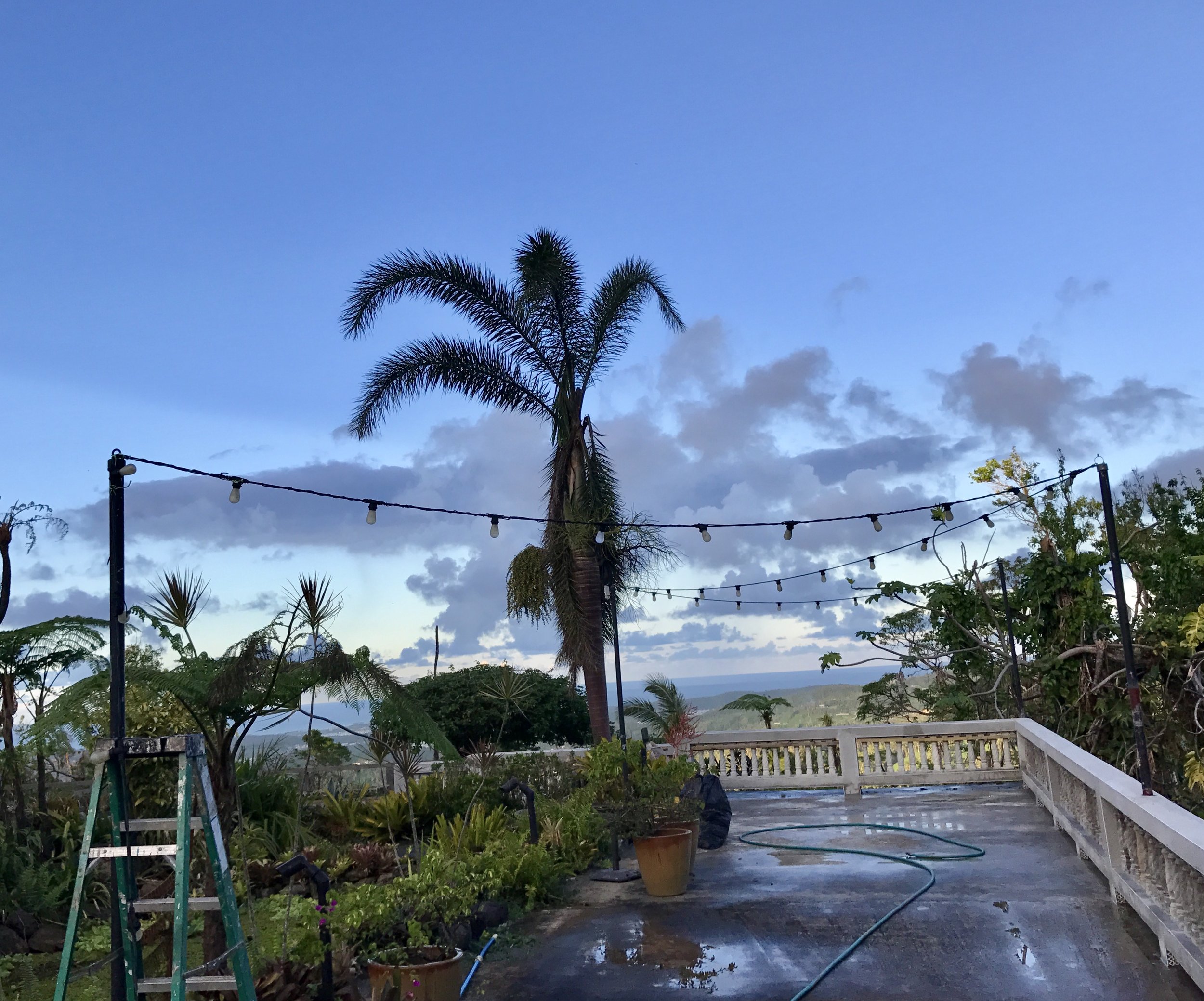
Even without internet the festoon lights look good.

Everything is Coming together Now
Our private hike "the lost machete trail" needed to be cleared of felled trees and brush after hurricane Maria.
A group of scientists and students from the nearby experimental station (where they are doing studies of the El Yunque rainforest) came by today and helped us open up our private hike. Sean wielded a chain saw and everyone else had machetes. We are so happy they came to help.

Sean, Eric, Kim, Barbara, Melisa and Dan
Sean is a biologist and he told me that 80% of the canopy has been destroyed by hurricane Maria. This is quite a change as you can see by the photos but it is also interesting.

Instead of canopy overhead now you can see clear blue sky. It is a big change. It is a terrific advantage for birders though as now you have so much visibility.

Trail marker around the tree and volunteers coming up behind me opening up our private hike
I walked ahead (if you can call the sinuous sometimes crawl through brush walking) of everyone marking the trail. There were so many downed trees I had to climb over around and under.

Of course Simonne went with us. In between cooling off in every stream Simonne helped me find the trail. She would forge ahead finding the original trail and then come back and looking at me as if to say to me "why are you so slow".

It was really wonderful being out on our trail again. The trail clearing volunteers got about half the trail cleared and ready. I went in almost to our amazing pool but stopped just short because there was quit a bit of brush from several felled trees that needed to be cleared out and I was ready to return home for lunch. We are going to come back and finish clearing the trail soon. With our private trail clear guests can experience the rainforest and spend some time in the pool above the big waterfall at the end of the trail.

Surviving Hurricane Maria
First part of our blog about the Rainforest Inn after hurricane Maria
The trials and tribulations of our everyday experience. Welcome to the new normalcy. part 1
Renée said: "First came Irma then that bitch Maria".
Maria hit two weeks after Hurricane Irma so we were already pretty much used to not having electricity but we had water and we had cell phone service and internet. Having water was nice. We have two cisterns which collect rainwater so we actually still have water, after the city water failed— with some caveats.
— click here to see Renée’s list of preparations for the hurricane. She's getting very good at preparing for hurricanes.
“I would have stopped Bill if I knew he was going so far out in the storm, all the way out on the chalet porch. We were safe in our little suite by the new pond. But never tell a man not to take risks as they will do just the opposite and Bill is an old journalist, anything for a story”. Renée said.
Video taken from chalet porch early in the morning while Maria was overhead.
During the storm I went out and got a couple of videos. The next video shows the tremendous rainfall from the storm.
Our first job after the storm was to clear our driveway and private road so that we could get out. We had lots of chainsawing ahead of us. Maria toppled so many trees along with power poles on our mile long private road that we were trapped. And we couldn’t call anyone either because our cell phone service was out. So for the first three days after the storm we couldn't tell anyone that we survived. We worked together clearing the trees. Bill wielded the chainsaw and Renée removed the branches and logs as each was cut free.

Our dogs looking worried and stress still after the storm.

Rainforest Inn driveway before and after the storm
“I scouted ahead climbing over the trees and discovered two trees ahead that were much larger in diameter than the blade of my chainsaw. I thought to myself -- should I tell Renée that we may never get out? I was thinking also that even if I could cut through the massive trunks on each side of the road how would Renée and I move the massive trunks aside? I was beginning to really feel trapped after I saw those massive felled trees." Bill said.

Bill standing in the middle of our private road en-meshed inside the felled trees and branches.
Day three after Maria passed
After the storm, we got up made some coffee with the French press (no power for the espresso machine) and prepared to go up and cut more trees trying not to think about the two massive trunks. We knew the city wasn’t coming to rescue us with all the other urgent emergency duties they had -- but then, all of a sudden, we could hear some equipment coming up the road. Sipping our coffee we went out in the driveway to look and were surprised to see our employees, Maribel, Jennifer and her family, and Benjamin our contractor and right behind them on a backhoe loader was our friend Greg and his crew of chain-sawing helpers. They had cleared the whole rest of the driveway all the way down to route 186. Actually they had cleared some of that main road too. Greg had moved the massive tree trunks aside with his loader. We were free!
“I knew in the back of my mind that Maribel and Jennifer were going to be the first people I saw after the disaster and they were. I also knew that Greg would be the next one with all his resources and his ability to rescue people. And Benjamin we had known since he was a little kid. It was like family coming to rescue us”. Renée said. “I had kind of felt a prisoner in my own home but at least it’s not too shabby being stranded at the Rainforest Inn”.
Day four

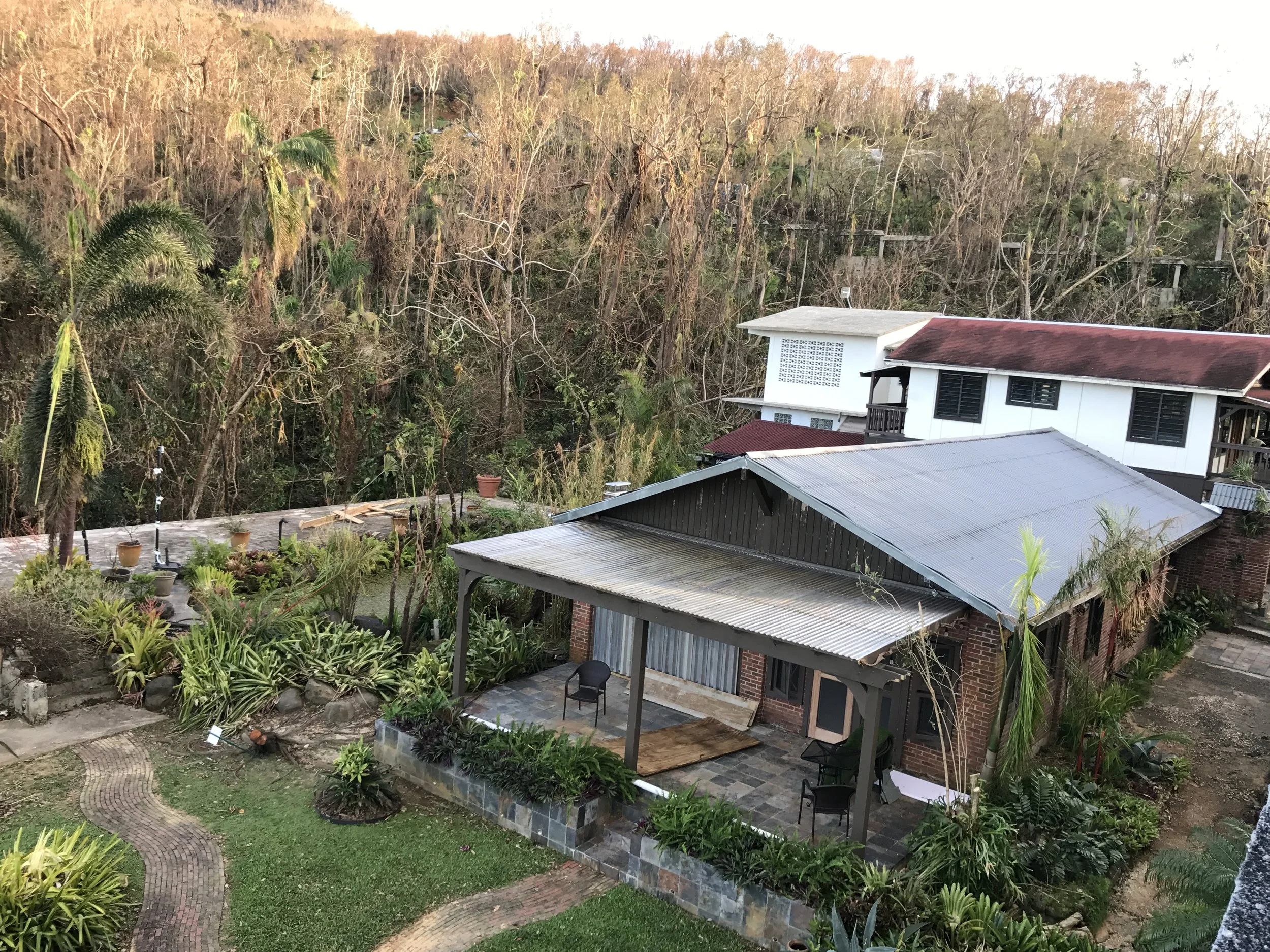
View of the surrounding rainforest after the storm.
The saga of our generators is complex and long but we will try to make it as short as possible. Because there are so many devices electricity is needed for at our Inn, like pumping the water out of the cisterns and pressurising it for use, that our struggle for electric power was one of our first tasks. The story started with our old propane generator burning out its control panel (this took many attempts at starting and testing before the hopelessness of ever getting that old generator operating again was apparent) and then our work on preparing a site for a borrowed diesel generator and wiring it in. We had a lot of hopes for this nice diesel unit as started instantly every time it was asked and literaly purred to life.
“I knew our old propane generator was on it’s last few coughs of power and had ordered a replacement at Antilles Generator. Mainly our problem using it the first two weeks after Irma took out the nearby power lines was getting enough propane delivered. And we have a back-up small diesel generator so don’t worry”. Bill said.
“I felt really bad for Bill up there trying to start the generator. It wouldn’t start and our loaner of a small diesel generator wouldn’t make power so I decided to do something evil. I was going to make chocolate chip cookies with no oven. I made them on the gas stove with a frying pan. They came out kind of funky but we both really liked the treat. When the going gets tough I get cooking.” - Renée said.
We had a couple of 100 lbs bottles of propane that we had filled the day before the hurricane by calling a friend and carrying them to the Rio Grande plant to be filled. But we never got to use them after the large propane tank emptied because of our old propane generator failing. For the next two days we tried to set-up the diesel backup generator. We built a roof over it and asked our friend Kellie for five gallons of diesel to run it. We still needed a special 220 twist plug but no one had one of those. Hardware stores were still not open. We pulled out the wires from the transfer switch for the propane generator and replaced them with a new line going to the small diesel plant.
“I decided to test the generator with a 110 plug because it had some of those standard receptacles too on its front panel. The generator started right up, like always, in a cloud of smelly diesel exhuast. It sounded good and I plugged in the line that I’d wired to one half of our distribution panel (for 110). Looking down the driveway to Renée for her signal and she gave a big thumbs down. No power. I even tried plugging a small test lamp in. Nothing. Our friend Greg had lent it to us not knowing that there was a problem with it.” Bill said.
Every evening our friends Greg and Linda were hosting a small dinner party for friends and neighbours. Friends with closed restaurants brought food from their refrigerators that had to be shut-down as did other neighbours and family. It was a wonderful get together. We went several evenings with Renée preparing an amazing dish contribution using vegetables from our garden.
I talked to my friend Carlos at the dinner and he offered to come and look at the diesel generator. He helped me work on it for quit few hours. Right away he pulled off the main panel and we saw many wires that had been cut by someone attempting a repair. We used a volt meter and wired it back as much as possible to no avail, finally concluding that the generator was never going to produce power no matter what we did. Maybe the stator coils were fried.
This is only part one of our hurricane Maria saga. We have lots more to tell. We'd end this with a video of the Roble in our driveway blooming again. The Rainforest Inn is cleaned up too and our rooms and grounds are ready for returning guests. Well we do have to wait a little until the stores are stocked again so we can replenish our pantry for the gourmet breakfasts we are known for. We have our favourite gardener, Laurie Michaels, coming in November and other volunteers who will arrive shortly after to help, not just repair, but make additions and improvements. There is still space for volunteer workers November on. We'd like to thank all he former guests who have offered help too!

Fresh Papaya for breakfast
We are lucky to have a couple of papaya plants that we grew from a Hawaiian papay seed. It is a delicious tasting papaya that has hints of floral and none of the strong smell of ordinary papayas.

The best way to pick papayas is with a tall ladder. If you use a fruit picker pole you risk damaging the soft ripe fruit.
Our Koi and Plans for the Pond
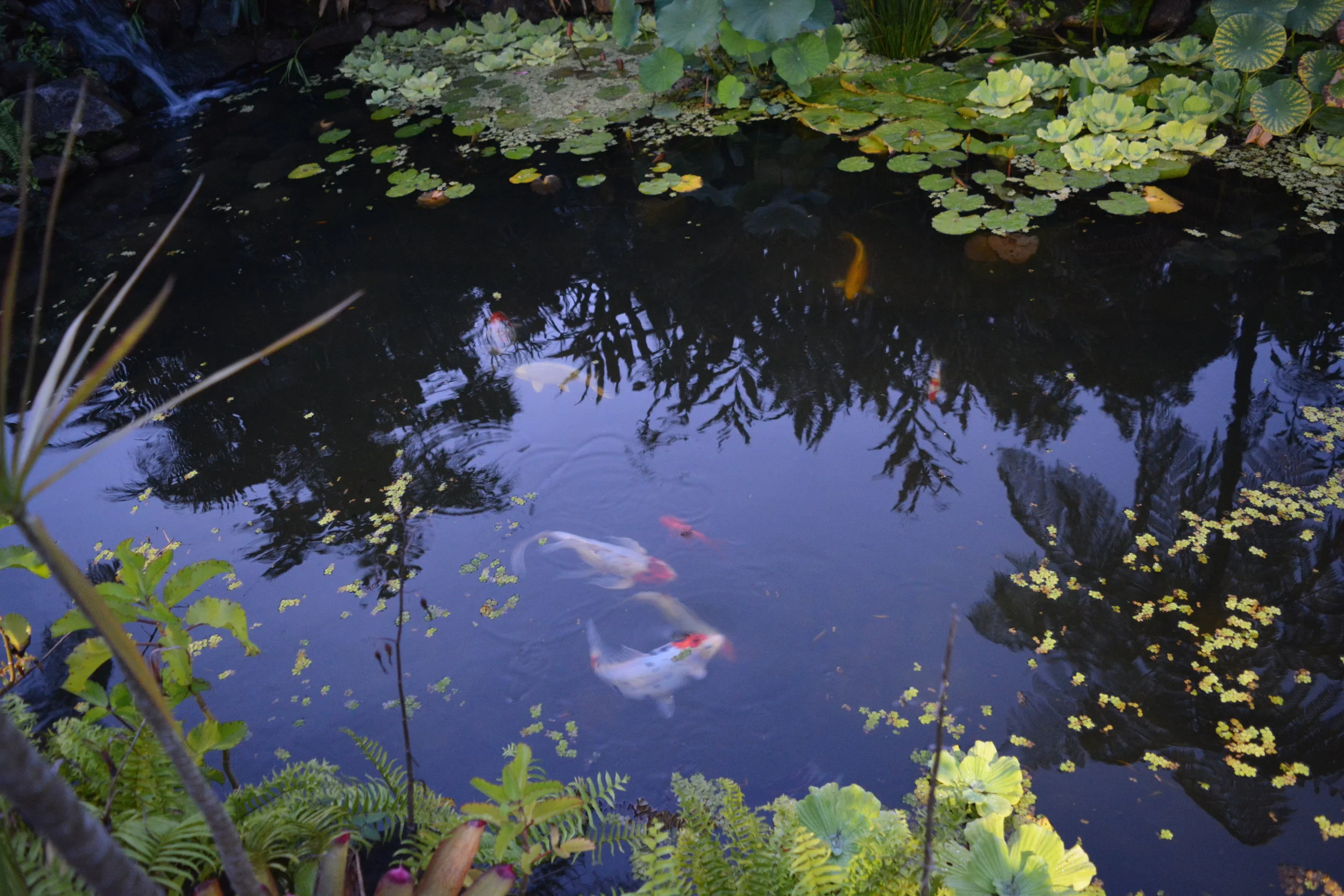
Incredible video of the koi swimming in our pond.
We love our big koi pond with the bio-filter that keeps it clean and all the lilies, both the big night blooming red ones, and the various color day blooming lilies (one of which has an amazing perfume). We also have some lotus plants but the koi trim them back too much lately for them to bloom. The koi mostly eat algae on the bottom of the pond. You can see them see-sawing back and forth when they rip pieces of algae off. But they prefer the food I throw in occasionally (and the tasty lotus roots) and the video below shows them swimming around happily eating.

Our pond has a plastic liner that is rated for thirty years but we have some doubts about those years, perhaps they are only in dog-years. So we are thinking about replacing the plastic liner with pool cement soon. If the liner was replaced we could also offer our pond for guests who would like to swim in a natural pond without hiking for twenty minutes to our rainforest pool above a waterfall. Below you can see a picture of our nearby waterfall.

Rainforest Inn's private jungle pool.
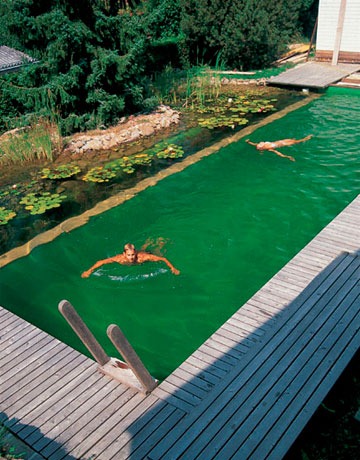
We have been thinking about making our koi pond into a natural pool that our guests can also swim in without first hiking through the jungle (on an amazing nature trail) for twenty minutes. The first step to that process will be building another koi pond back under the jungle suite so we will have a place for our beloved koi and the many varieties of lilies and lotus plants while we drain the big koi pond and line it with pool cement. The new pool would use the existing bio-filter and some more plantings on the side to keep the water pure. We probably won't be able to return the koi as they are very large and we don't know if our guests will be comfortable swimming with them.
When we start the new pond I'll put some pictures and drawings in another blog. It will have a bio-filter and waterfall too but we might also include a UV sterilizer (to clump up the algae) as a test to see how much clearer the water is.
Our Bat Homes
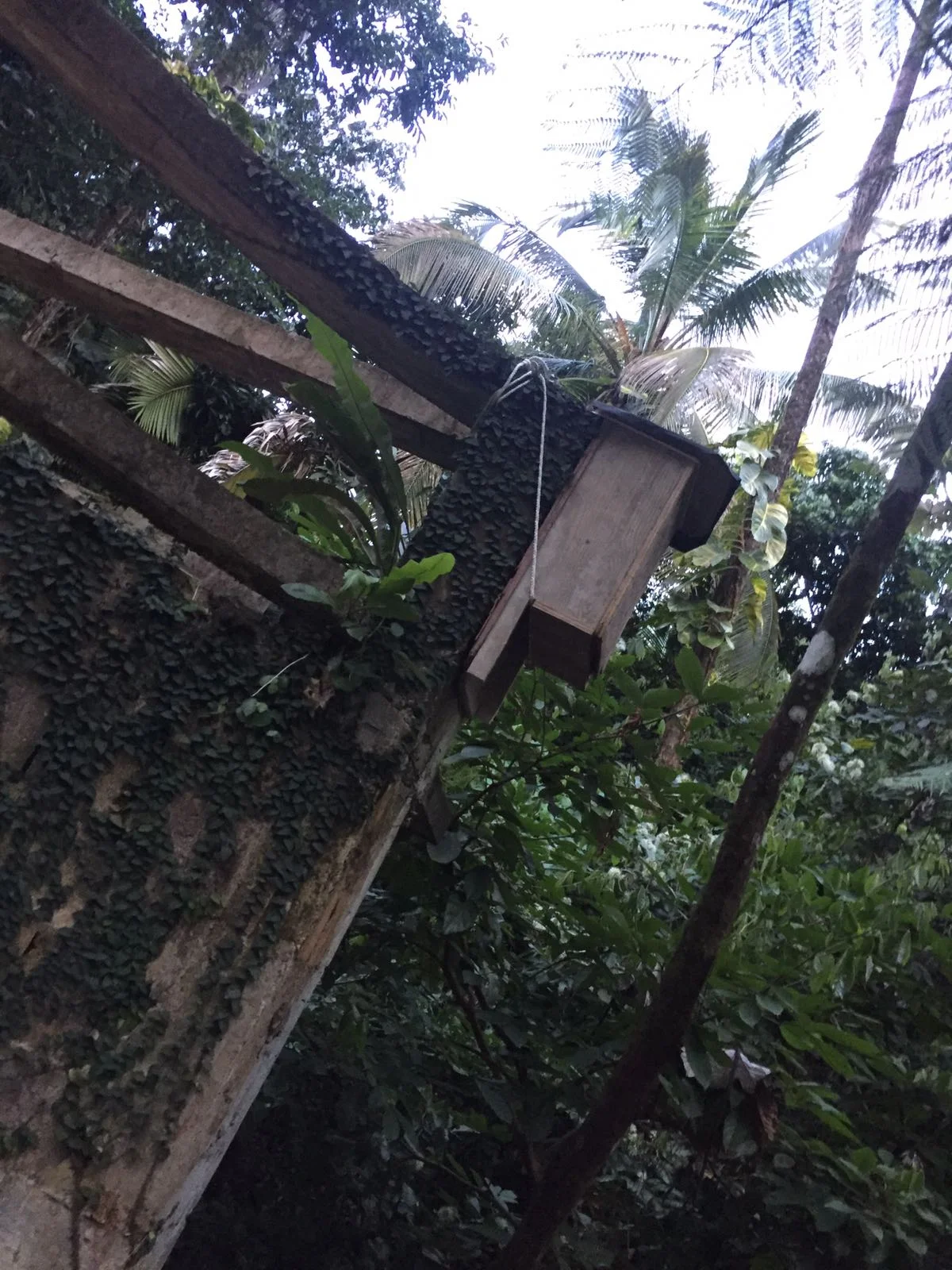
Bat homes at the rainforest inn help us combat mosquito.
An essential part of our biowarfare program against mosquitoes is the many visiting rainforest bats. We recently built some homes for them so they would be more comfortable. The homes are made of plywood with a lexan roof.

Design for a bat home
A former volunteer and a biologist, Tomáš, made two nice bat homes for us and installed them.

The bats fly in underneath and are protected
Rainforest Inn was Awarded Small Green Hotel of the Year!

Just after award ceremony at the Condado Plaza Hotel.
We at the Rainforest Inn have been working very hard to be sustainable and to respect the rainforest environment that our inn shares. Tripadvisor has recognised us as a "Platinum" level green bed and breakfast. The Tourism Department of Puerto Rico has certified us as a "Sustainable Tourism Facility". And now the Puerto Rico Hotel and Tourism Association honoured us with the small green hotel of the year award.
We are so proud and we will never stop doing everything it takes to be sustainable in the El Yunque rainforest of Puerto Rico.
Revealing the Secrets of the Lost Machete Trail
Six young scientists showed up at our door, sweaty but cheery, after running down 2.5 kilometers from the nearby El Verde Field Station and then up our steep driveway that climbs over 172 meters in just 1.5 kilometers. The group, lead by the Luquillo Forest Dynamics Plot (LFDP) Project Manager Seth Rifkin, came to trek a few miles further into the rainforest to bestow their knowledge upon our private Lost Machete Trail hike. The researchers had been working at El Verde for sometime between a few weeks to a few months, and Rifkin has been there for eight years, so they know more about the trees in El Yunque than the average person knows about the far fewer species found in our North American forests.
Rifkin manages a 16-hectare study plot next to El Verde Field Station, which lies at about 350 meters elevation. The plot spans out over both forest that was never selectively cut as well as forest that had been used for agriculture until the mid-20th century, Rifkin said. The LFDP was established in 1990 to observe how the rainforest recovers from hurricane damage, specifically in the aftermath of hurricane Hugo in 1989. Every five years around 25 researchers, most commonly recent college graduates, live at the field station for anywhere from a few months to a year, working to collect data for the tree census. Their work entails hiking to various quadrants, through mud and streams and over steep hills, and measuring every tree stem at 130 centimeters from the ground that is more that one centimeter in diameter at that point and record the species and physical damage to the crown or trunk.
The data collected at the LFDP contributes to the Smithsonian’s Center for Tropical Forest Science - Forest Global Earth Observatory (CTFS - ForestGEO)—a global network of over 60 forest research plots across the Americas, Africa, Asia, and Europe reserved for the study of tropical and temperate forest function and diversity. CTFS-ForestGEO monitors the growth and survival of approximately 6 million trees and 10,000 species, in plots around the world that are varying sizes but use the same research methodology. The LFDP is affiliated with the University of Puerto Rico and funded by the National Science Foundation’s Long Term Ecological Research Program. The data collected by the El Verde crew goes into the ForestGEO database and is analyzed for factors that contribute to tree species community dynamics, how anthropogenic climate change is changing those dynamics, and other threats to species diversity.
“As the project was developing, they came to the realization that there was more of an effect of past human land-use patterns on the tree species composition then even the hurricane damage,” Rifkin said. “There is also an additive effect of those two types of disturbance to the tree species composition.”
The ForestGEO timeline is essentially indefinite, Rifkin said, as long as there are still forests to monitor. Luckily there are scientists who remain excited about measuring trees year after year, and were more than happy to explore the forests outside of their study plot.
The El Verde crew eagerly set off on our hike and returned a few hours later having only made it halfway to the natural pool at the summit because they ran out of sunlight. If you have ever hiked (or even stepped outside of your front door) with a biologist, you are privy to the fact that it takes significantly longer to go from point A to point B than it would with someone lacking training in ecology because a biologist will stop and gawk all eye-catching flora and fauna they pass. Given the biodiversity of El Yunque rainforest, our hike must have been a field day for the El Verde crew.
We sat down with Rifkin after the hike and he shared with us the knowledge that he and his colleagues noted about the trail; and it was a lot, because the tree species composition here is pretty similar to what the El Verde crew studies at the LFDP, Rifkin said. We also added some insight of our own and compiled a hike guidebook for our guests; here is a sneak peek...
Cecropia, known locally as Yagrumo hembra, is a genus consisting of 61 species; most common in El Yunque are Cecropia schreberiana (Pumpwood) and Cecropia peltata (Trumpet Tree or Snakewood). Cecropia are common in El Yunque because they are pioneer trees that establish abundantly after recurrent hurricane damage opens up the forest canopy and provides sun for the light-demanding tree. They are fast-growing, opportunistic trees that are one of the world's 100 most invasive alien species off the island, luckily they are native to Puerto Rico and are part of the rainforests’ strategy for hurricane recovery. Cecropia are easily distinguished by their large, deeply lobed leaf that looks like a hand and their white underbelly that shows when storm winds blow through the forest. The Taino word yagrumo means "two faced," which refers to the leaf faces’ mismatching colors. The leaves are steeped as tea used to treat kidney ailments and asthma, reduce pain and inflammation and kill bacteria and fungi.
Carrasco (Comocladia glabra) is a poisonous evergreen shrub in the same plant family as poison ivy, thus causing a similar skin reaction—and sometimes even more severe. It has a slender, unbranched trunk with large, lance-shaped spreading leaves, clusters of tiny dark red flowers and small reddish-black fruits. Its white sap turns black when exposed to air and is caustic, creating a painfully itchy rash that lasts several hours, sometimes days.
The Tree fern (Cyathea arborea) or Helecho arboreo in Spanish, has thrived since the era when dinosaurs roamed the earth. This perennial fern is successful in high-moisture environments and in colonizing landslides. Its crown has 10 or more fronds in the form of a fan, which each live for only 3 months but hold 3-5 billion spores for germination. When the tree fern is young, its fronds are rolled up. As they grow, each frond unrolls until it reaches its horizontal position.
Ficus Citrifolia, the Shortleaf or Strangler fig, is called Jagüey blanco in Spanish. The fig tree is an abundant tropical keystone species because figs are a major component of the diets of more species of animals than any other tropical perennial fruit, and because the hollow, lattice-like trunk provides a home for thousands of invertebrates, rodents, bats, birds and reptiles. Fig fruit turn from yellow to dark red when ripe, and are sweet and safe for human consumption. Fig begin their life as an epiphyte, a strategy which allows them to avoid competition for light by attacking palms and other trees, strangling them as it grows. The tiny epiphyte grows to an impressive height of 15 meters and covers a wide area due to their ability to drop aerial roots from branches and spread horizontally among the strangled parent tree. Ficus citrifolia is under strong selective pressure to flower and continuously produce fruit due to its mutualistic relationship with its specific species of pollinating fig wasp, which lays eggs in the fruit and acts as a pollinator for a specific species of fig. The fruit has a purgative effect on the digestive systems of animals that dine on it so its seeds are spread far and wide through dung.
Manilkara bidentata, Bulletwood or Ausubo, as it is most commonly called, is a large evergreen tree that was once one of the most important timber trees of Puerto Rico. In the Spanish colonial days it was cut down on the coast and its strong, highly valued wood was floated over to San Juan, where it was used as ceiling beams in many buildings still standing today in Old San Juan. Oxen also pulled carts laden with Ausubo beams over land to San Juan from El Yunque. Because it is extremely tolerant of shade, Ausubo is common in the lower elevations of El Yunque, where it can live up to 400 years. The tree is also tapped for its milky latex sap, the source of balata gum, which is sometimes used in products such as golf balls.
Prestoea acuminata var. Montana is the Sierra Palm, or Palma sierra. It is the most common tree in this elevation of El Yunque, succeeding where most trees cannot. Its distinguishing above-ground roots capture enough oxygen so that it can grow well in waterlogged soils. Thus, Sierra palms blanket steep slopes, unstable soils and high elevation streambeds. Very few other species of palm are found in the rainforest. Importantly, its fruit is the beloved Puerto Rican Parrot’s favorite food.
Pterocarpus officinalis is called either Palo de pollo or Sangre de drago. The most distinguishing feature of this impressive tree is its narrow, long buttresses (above-ground roots) that make the tree reminiscent of a palo de pollo—translated as “chicken stick” or “chicken foot.” The Palo de pollo buttresses, up to 4.5 meters tall, absorb oxygen in oxygen-poor soils such as in swamps and along streams. This evergreen tree grows, often twisted and fluted, to about 20-30 meters tall. When the bark is wounded it yields a copious amount of red sap that hardens into crimson “tears.” This is collected as sangre de drago, “dragon’s blood.” The sap is astringent and haemostatic—having the capability to close wounds and stop blood flow—and is used in the treatment of diarrhea, mouth sores and thrush. The tree has a large nitrogen-fixing capacity and provides vast shade for other flora such as coffee plants—both reasons that it survived subsistence coffee farmers years ago that cut down neighboring tropical hardwood trees to use as charcoal for the sugar cane refineries.
Swietenia macrophylla is called either Honduran or Big-leaf mahogany (Caoba de Honduras or de Hoja grande). Our mahogany trees were planted over 30 years ago to test a new design for mahogany plantations. Instead of initially clear cutting the forest plot with traditional slash and burn procedures, forestry scientists planted many rows of mahogany and applied defoliant spray during their early growth to discourage competition for sunlight from nearby trees. This species of mahogany is fast growing but not as dense or elegantly figured as the native mahogany, Swietenia mahagoni. Once mature, the seed of mahogany splits and falls to the ground as a beautiful flower-shaped woody structure.
Syzygium jambos is the Rose Apple. This tree is native to Southeast Asia and moderately invasive in Puerto Rico. The fruit is edible and has a strong floral aroma, earning its name of "rose apple" or pomarrosa. At the Rainforest Inn, we occasionally serve freshly picked pomarrosas from our trees with our breakfasts. The fruit is rich in vitamin C and can be eaten raw or used in various regional recipes. The wood is dense and is therefore a source of charcoal. Additionally, the tree contains various tannins that may have antimicrobial applications and some parts of the tree are used in regional traditional medicine.
These trees are tagged along the Lost Machete Trail to help our guests better understand and appreciate the rainforest in which they are vacationing. Our new hike guidebook is a part of our ecological signage around the inn that has helped us earn accreditation by the Puerto Rico Tourism Company’s Sustainable Tourism Facilities Program. We are excited to share the secrets of the Lost Machete Trail...and there are even more to come once the El Verde scientists return for part two of their quest to the beautiful private pool above the 70-foot waterfall at the trail’s end!